The checklist vacation is over.
You know the one. Five countries in twelve days. Three museums before lunch. Photos at every landmark but no actual memory of how any of it felt. Racing through experiences just to say you did them, then coming home more exhausted than when you left.
That's not how you travel anymore.
In 2026, luxury isn't about how many passport stamps you can collect or how fast you can hit every UNESCO site in a region. It's about how rested you feel when you come home. How seen you felt during the trip. How much you actually remember instead of just photographed.
You're choosing fewer trips, longer stays, deeper connections. You're spending more, but on journeys that feel personal, unhurried, and beautifully private. On itineraries that match how you actually want to live, not just where Instagram says you should go.
We're seeing this shift across all our clients, and it shows up in three major ways: personalization that actually knows you, slow travel that prioritizes rhythm over rush, and privacy that means calm instead of crowds.
Personalization: We Actually Know You
Personalization used to mean your name on a welcome card and your preferred wine in the room. Now it's the entire structure of your trip.
We're building itineraries around your specific rituals, passions, and non-negotiables. Where you sit on the plane matters. What time you like to eat matters. Which museums you'll skip because you hate crowds matters. Whether you'd rather spend an afternoon at a local market or a Michelin restaurant—that all matters.
You're not impressed by generic five-star packages anymore. You want trips built around what you actually love. Food-led journeys through Spain's taverns and Peru's markets. Film-inspired routes in Switzerland. Sakura-focused itineraries in Japan timed exactly when the blooms peak in regions tourists don't typically visit.
The goal is simple: your itinerary should feel inevitable—like it couldn't have been built for anyone else.
What This Actually Looks Like
Private guides who adjust in real time. Not someone reciting facts from a script, but someone who reads the room and swaps a museum day for a spontaneous market visit when they see you're more interested in food than frescoes. Someone who extends a winery lunch because the conversation is too good to leave.
Itineraries that reflect your values. Supporting local communities in Morocco and Peru. Choosing properties that prioritize sustainability in New Zealand and Finland. Spending your money where it actually makes a difference to the people who live there.
Experiences curated around who you are, not your demographic. A 40-year-old executive who loves anime gets a completely different Japan itinerary than a 40-year-old executive who's there for kaiseki and temples. Same destination, entirely different trip. Both exactly right.
Where We're Sending You
Spain & Portugal – Food-first journeys through local taverns, markets, and family-run restaurants you'd never find on Google. Private touring layered in, but the focus is on how Spaniards actually eat, not where tourists are told to go.
Japan & South Korea – Cherry blossoms, yes, but also anime districts, K-culture deep dives, ramen trails, temple stays, and culinary experiences built around what you actually love—not what the guidebook says you should.
Peru – From Lima's restaurant scene to the Sacred Valley and Machu Picchu. History, food, and soft adventure tailored to your exact comfort level. Some people want to hike Huayna Picchu. Others want a private chef in their villa overlooking the ruins. Both are valid.
Slow Travel: Fewer Trips, Deeper Journeys
The "five cities in ten days" trip is done. You're choosing one region, staying longer, and letting local rhythms shape your days—long lunches, late dinners, neighborhood walks, unplanned moments that would never survive a tightly packed itinerary.
This isn't about being lazy. It's about recognizing that rushing through a place doesn't actually let you experience it. You end up with photos but no memory of how the light felt at sunset. You eat at the famous restaurant but don't remember what it tasted like because you were already thinking about the next day's schedule.
Slow travel means open space in the itinerary for rest, wandering, and meaningful connection. It means shoulder-season and off-peak timing to avoid crowds and high-season pricing—Europe in spring or autumn, Japan beyond cherry blossom peak, Morocco outside summer heat.
It also means trips that serve as pauses in life rather than just breaks from work. Time to recalibrate, journal, reconnect with your partner or family or yourself. The kind of trip where you actually come back different, not just tired.
What This Actually Looks Like
Longer stays with breathing room. Instead of three nights in each city, it's five to seven nights in one place with full days that aren't scheduled minute-by-minute. You have breakfast when you're hungry, not when the tour bus leaves.
Travel as life rhythm, not escape from it. Some of you are taking trips specifically to work remotely from beautiful places—not as "digital nomads" but as a way to blend productivity with genuine rest. A villa in Tuscany. A ryokan in Japan. Somewhere with good WiFi, great food, and the kind of quiet that doesn't exist at home.
Unplanned moments that would never survive a tight schedule. Extending a winery lunch because the winemaker is telling stories. Spending an extra hour at a viewpoint because the light is perfect. Skipping the museum because you'd rather nap. All completely fine.
Where We're Sending You
Meet Europe & Meet Switzerland – Our 19-day European journeys and Switzerland's cinematic landscapes are built for you if you want to linger in cities, lakes, and alpine towns instead of racing between capitals. The train rides are part of the experience, not just transportation.
Meet New Zealand – Rugged coastlines, rolling mountains, rich Maori culture. Natural fit for long, scenic drives, multi-night stays, and deep immersion. You're not "doing" New Zealand. You're actually experiencing it at a pace that lets it sink in.
Meet Finland – Husky sledding, frozen lakes, Northern Lights in winter. This is slow by design. Early nights, quiet days, unhurried experiences under the Arctic sky. The opposite of hustle.
Privacy: Calm Is the New Status Symbol
After years of overtourism and influencer-crowded destinations, you want one thing above all: space. Not just physical space, but mental space. Environments where you can exhale. Experiences where you're not fighting crowds or performing for other people's cameras.
Privacy in 2026 doesn't just mean private villas, though it definitely includes that. It means low-density experiences. Destinations where "exclusive" means fewer people, not just higher price tags. Properties with staff who know when to step in and when to disappear.
The shift is away from "being seen at the right place" toward "having the right place mostly to yourself."
What This Actually Looks Like
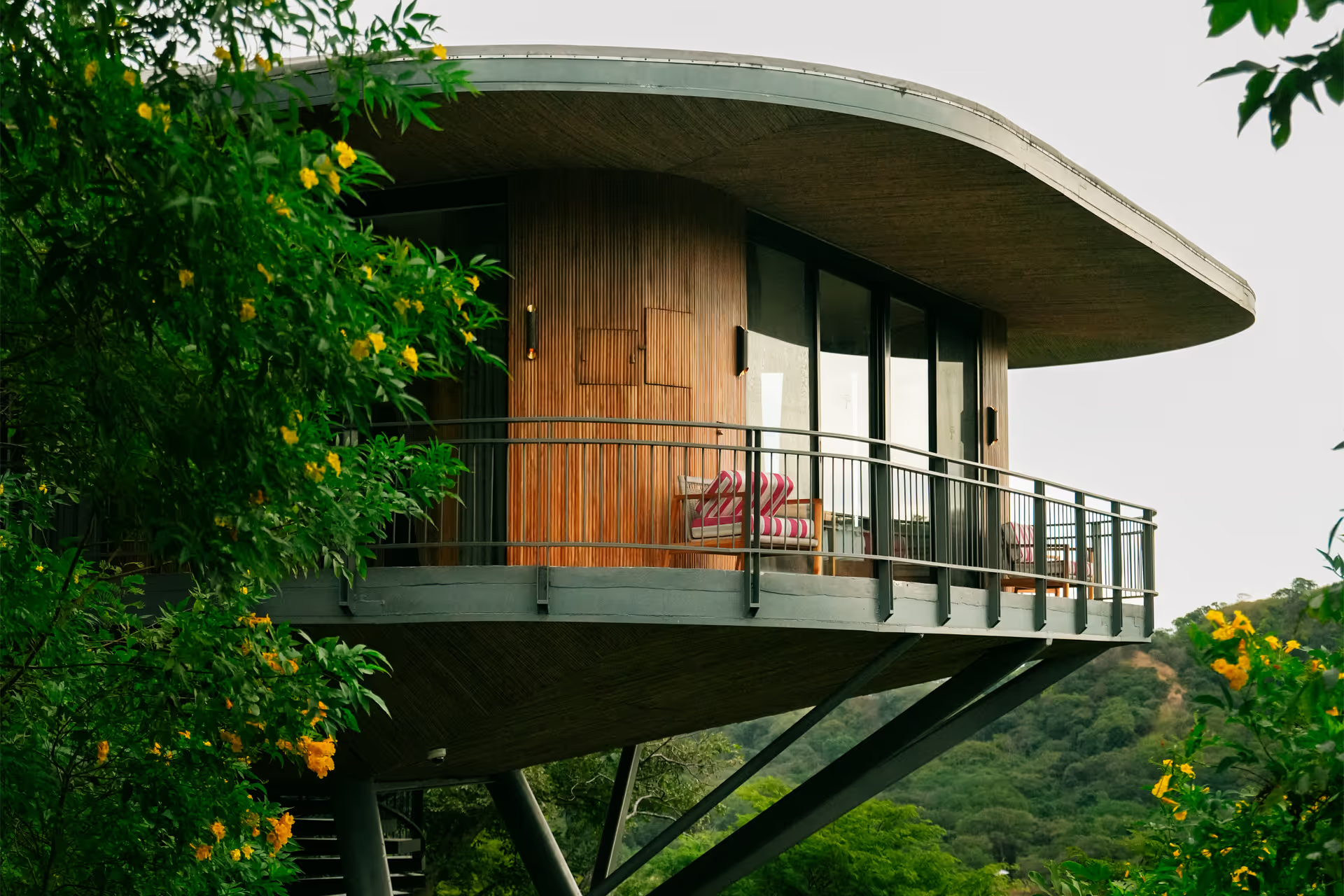
Boutique properties with fewer rooms. Not 300-room resorts. Small lodges, riads, villas where you might only encounter a handful of other guests during your entire stay.
Destinations that naturally offer solitude. National parks. Desert camps. Remote islands. Polar regions. Places where the infrastructure limits how many people can be there at once.
End-to-end support from us. Privacy isn't just about the destination—it's about not having to handle every transfer, booking, and contingency yourself. You want the freedom that comes from knowing someone competent is managing the details so you can actually relax.
Where We're Sending You
Maldives – Beach houses, pristine white-sand islands, overwater or beachfront stays that deliver built-in seclusion and direct access to the sea. You're not sharing your sunset with a hundred other people.
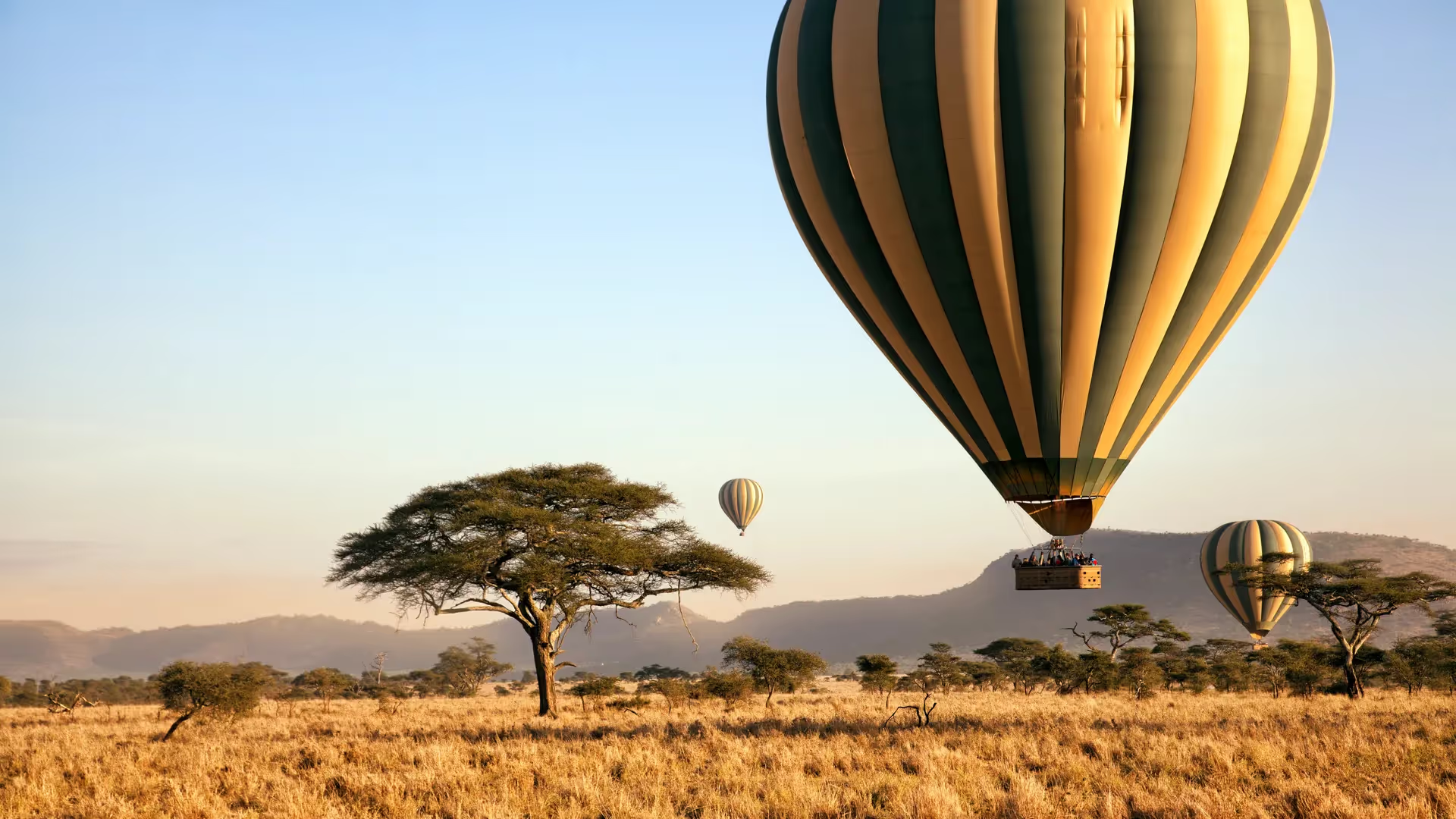
Tanzania – Private or small-group safaris in the Serengeti and around Kilimanjaro. Wildlife, wide-open spaces, and nights under the stars far from city noise. The kind of quiet you can't manufacture anywhere else.
Antarctica – The ultimate low-density destination. Expedition ships, wildlife viewing, polar landscapes, and total disconnection from daily life. You're not getting cell service. You're not checking email. You're just there.
Morocco – Riads with interior courtyards that block out the chaos of the medina. Desert camps in the Sahara where you can see every star. Curated routes through imperial cities that offer privacy, culture, and sensory richness without the chaos of mass tours.
Why This Matters
Industry data shows you're spending more in 2026—but on fewer, deeper trips that feel personal, slow, and protected. You're turning to us to remove the decision fatigue, handle logistics, and craft itineraries that match how you actually want to live, not just where you want to go.
Access Travel is already built for this moment. We've been doing hyper-personal itineraries for 14 years. We know the destinations that naturally support slow, immersive travel—from Europe and Japan to Peru, New Zealand, and Morocco. We have a global network of premium partners that unlock privacy, ease, and seamless support at every step.
So this year, stop collecting trips. Start curating the journeys that actually match who you are now.
Ready to plan your 2026? Let's build something that feels entirely yours—personal, unhurried, and beautifully calm. Talk to us about your next journey.