What if you could experience two completely different countries in one trip without feeling exhausted? India and Sri Lanka sit close to each other on the map, but traveling between them feels like switching channels. India hits you with everything at once: crowded markets, massive monuments, constant noise and color. Sri Lanka lets you breathe: quiet tea plantations, peaceful beaches, and temples without the chaos.
This combination works surprisingly well. You get the cultural immersion you want from India, then you actually get to relax in Sri Lanka instead of needing a vacation from your vacation. For Filipino travelers who wish to see major landmarks but also enjoy some downtime, this pairing makes sense.
India: Where History Demands Your Attention
Let's start with what you already know about India. It's big, it's busy, and it's full of incredible historical sites. The Golden Triangle (Delhi, Agra, Jaipur) is popular for good reason. These three cities give you Mughal architecture, massive forts, colorful bazaars, and yes, the Taj Mahal.
Delhi is actually two cities in one. Old Delhi feels like stepping back in time. Chandni Chowk's narrow lanes are packed with spice shops, textile sellers, and street food vendors selling everything from parathas to jalebis. The Red Fort sits massive and imposing, its red sandstone walls still commanding after centuries. Jama Masjid, one of India's largest mosques, has a courtyard that can hold 25,000 people at once.
New Delhi is completely different: wide boulevards, colonial architecture, and India Gate standing at the center of it all. Humayun's Tomb gives you a preview of what Mughal architecture is all about before you see the Taj Mahal. The gardens here are peaceful, and you can actually hear yourself think, which is saying something in Delhi.
The best way to explore Old Delhi? Rickshaw. Walking takes forever because of the crowds, and cars can't fit through most streets. A rickshaw gets you through the chaos while you take photos and smell all the spices being sold everywhere. Your driver will somehow navigate lanes that look too narrow for anything with wheels.
Agra: More Than Just That One Monument
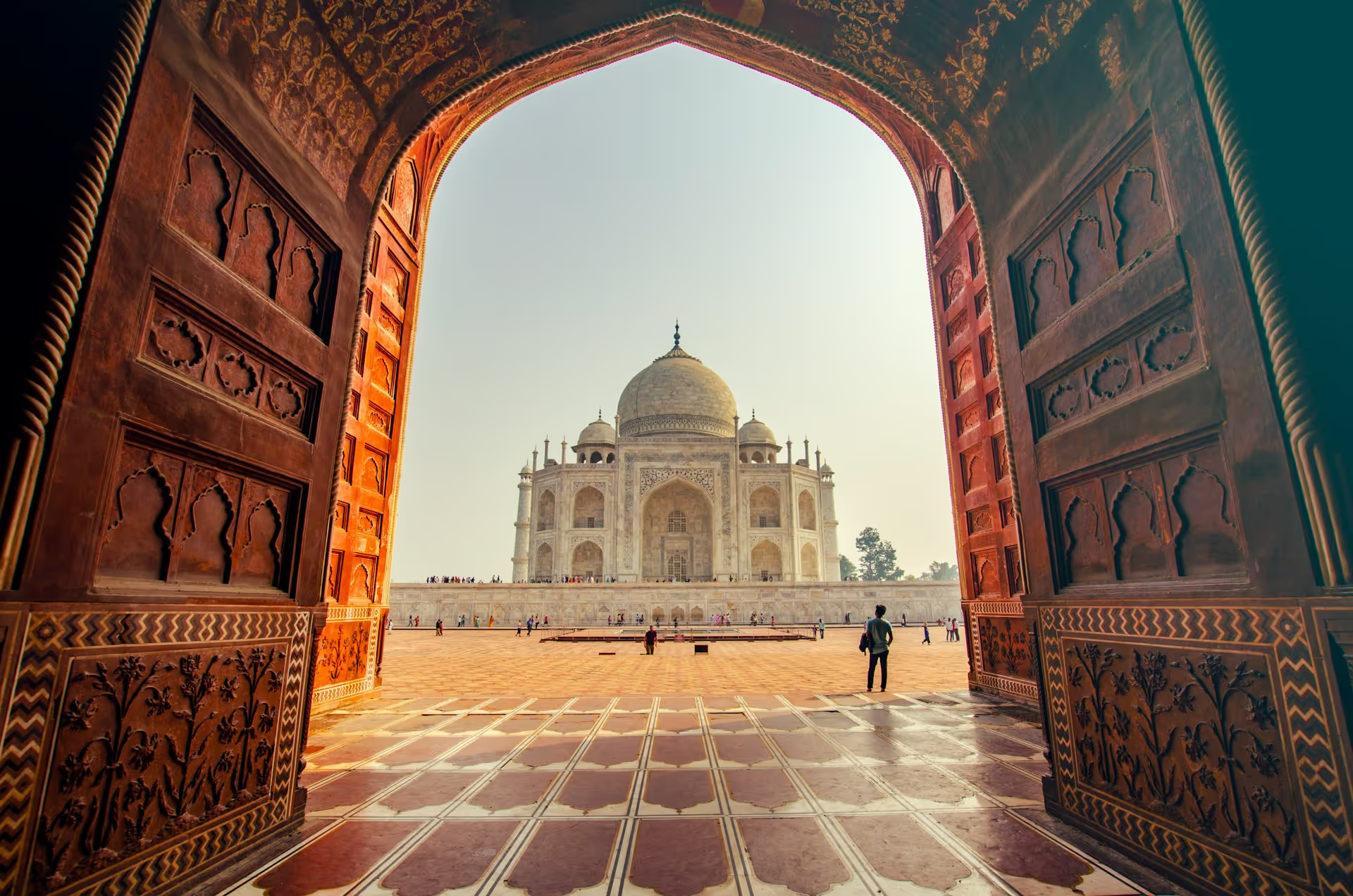
Agra is obviously about the Taj Mahal, but here's what makes the experience better: going at sunrise. The white marble literally changes color as the sun comes up, soft gold turning to pink, turning to brilliant white. It's not just a photo thing. The light makes the building look different, and there are fewer crowds at 6 AM than at midday.
After you've seen the main view that's on every postcard and Instagram feed, walk to Mehtab Bagh across the river. This garden offers a different angle on the Taj Mahal, and it's way less crowded. Some people actually prefer this view because you can see the whole structure reflected in the water without hundreds of other tourists photobombing your shots.
Agra Fort deserves more time than most people give it. This isn't just one building; it's basically a walled city with palaces, mosques, and halls inside. Shah Jahan, the guy who built the Taj Mahal, was imprisoned here by his own son. He spent his final years looking out at the tomb he built for his wife. The view from his room to the Taj Mahal is still there, and knowing the story makes it hit different.
The markets in Agra are worth exploring too. Marble inlay work, leather goods, textiles. This is where you can actually buy souvenirs without feeling completely ripped off. Just remember to bargain. The first price they quote is never the real price.
Jaipur: The Pink City That Delivers
Jaipur brings the color. And when they say pink, they mean it. There was a royal decree that all buildings in the old city had to be painted terracotta pink to welcome a visiting prince. The whole town still follows this rule.
Amer Fort sits on a hill outside the city, and it's massive. You can ride an elephant up (though many people skip this now for animal welfare reasons) or just take a jeep. Inside, the mirror work in the Sheesh Mahal is incredible, with tiny pieces of glass and mirrors covering the walls and ceiling. Light one candl,e and supposedly the whole room sparkles.
The City Palace in central Jaipur is still partly occupied by the royal family. You can visit the museum sections and see royal costumes, weapons,and manuscripts. Jantar Mantar next door is a collection of massive astronomical instruments from the 1700s. They're not just for show; they actually still work and can tell time, predict eclipses, and track stars. It's basically a giant outdoor science museum from before calculators existed.
The Palace of Winds (Hawa Mahal) is basically a fancy facade with hundreds of tiny windows. Royal women used to watch street festivals from behind these windows without being seen. Now it's Jaipur's most photographed building, especially good in the late afternoon light.
Shopping in Jaipur is serious business. The bazaars sell jewelry, textiles, block-printed fabrics, blue pottery, and precious stones. Bargaining is expected, and vendors here are pros at it. Start at about 40% of their first price and work from there. They'll act offended, you'll pretend to walk away, and eventually you'll meet somewhere in the middle. It's all part of the experience.
Flying to Sri Lanka: The Volume Gets Turned Down
After a week of India's intensity, flying to Sri Lanka feels like someone turned down the volume on everything. The cities are smaller. The crowds are thinner. The pace is slower. It's still culturally rich and historically fascinating, but it doesn't demand constant attention the way India does.
Colombo, the capital, is your entry point. It's worth a quick tour: Gangaramaya Temple with its eclectic collection of artifacts, colonial buildings from British rule, Galle Face Green where locals gather by the ocean in the evenings. But most itineraries don't linger here long because the real attractions are elsewhere.
Sigiriya: The Rock You Have to Climb
.avif)
Sigiriya Rock Fortress is Sri Lanka's most famous landmark, and climbing it is basically required. This 200-meter-high rock juts straight up from the flat jungle around it. A king built his palace on top in the 5th century because he was paranoid about being attacked and wanted somewhere defensible.
The climb takes about an hour with stairs built into the rock face. Halfway up, you pass ancient frescoes of women painted directly on the rock wall. At the top, you get views across the central plains and can see the ruins of the palace, pools, and gardens that this king built up here.
The climb isn't a casual walk. There are 1,200 steps, some quite steep, and the final section involves climbing through a giant lion's paws (hence the name: Sigiriya means Lion Rock). If you're not in decent shape or have knee problems, think carefully about this. But most reasonably fit people can do it, and the view from the top makes it worthwhile. Just bring water and go early before it gets too hot.
Dambulla and Kandy: Temples at a Gentler Pace
Dambulla Cave Temple is nearby and much easier physically. Five caves filled with Buddha statues and murals covering the walls and ceilings. Some of these paintings are over 2,000 years old. The caves are still an active religious site, so you'll see local people coming to pray, not just tourists with cameras. On major religious days, it can still feel busy, but compared to India's biggest cities, the energy is calmer and more contemplative.
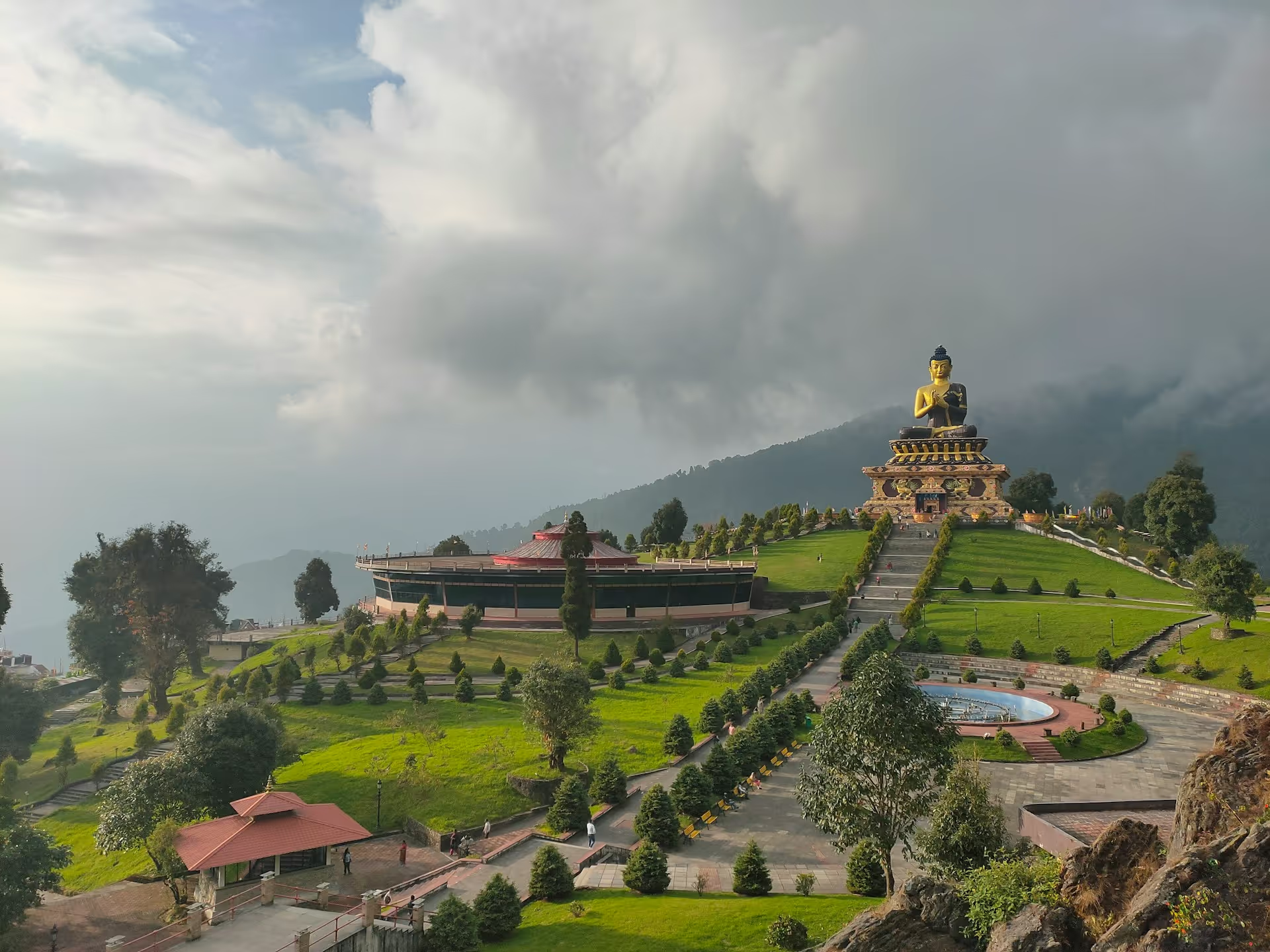
Kandy sits in the hill country and feels more relaxed than the cities you just left. The Temple of the Tooth Relic is here, supposedl,y one of Buddha's actual teeth is kept inside. You can't see the tooth itself, but the temple is worth visiting for the architecture and the cultural significance. This is one of Buddhism's most sacred sites.
The lake in the center of Kandy is nice for walking around in the evening when it's cooler. Traditional Kandyan dance performances happen most nights at cultural centers around the city. They're touristy, sure, but the dancing is legitimately impressive: fire walking, acrobatics, and really skilled drummers. It's entertaining even if you know it's partly staged for visitors.
Tea Country: The Part Everyone Remembers
The train ride from Kandy to Nuwara Eliya (or on to Ella if your itinerary goes there) is consistently rated as one of the world's most scenic rail journeys. And it actually lives up to the hype. For several hours, you pass through tea plantations covering every hillside, waterfalls dropping down cliffs, small villages, misty valleys. The train moves slowly enough that you can really take it all in.
Here's a tip: book second or third class if you can handle it. First class has air conditioning and assigned seats, which sounds nice, but the windows don't open. Second and third class have open windows (and sometimes open doors) where you can lean out and get better photos. Just hold on tight when you do.
Nuwara Eliya looks like a British hill station, because that's precisely what it was during colonial times. The architecture is still there: old post office, golf club, mock-Tudor buildings. The town is at a high elevation, so it's actually cool, sometimes even cold in the mornings. After the heat of India and lowland Sri Lanka, you might need a jacket here.
Tea estates surround the town. You can visit working factories to see how tea leaves go from plant to packaged product. The tours are interesting, and you get to sample different types of Ceylon tea: black tea, green tea, and white tea, all grown right here. Some estates have colonial bungalows converted into boutique hotels where you can stay right in the middle of the tea fields, wake up to mist and mountains.
The Coast: Where You Finally Stop Moving
.avif)
The southern coast is where most itineraries end, and strategically, this makes sense. After two weeks of sightseeing, temples, climbing rocks, and early morning starts, you actually want to sit on a beach and do nothing for a few days.
Bentota has calm waters good for swimming. Mirissa is known for whale watching, especially during the season (roughly December to April, when whale sightings are most reliable). Galle has a UNESCO-listed Dutch fort you can walk around: colonial walls, a lighthouse, cute cafes and boutique shops inside. Ahangama is more laid-back, with good surfing and fewer tourists.
The Madu River cruise in Bentota is a nice break from beach time. You boat through mangroves, see water birds,and stop at a turtle hatchery where they protect endangered sea turtles. It's low-key but enjoyable, especially if you're traveling with kids.
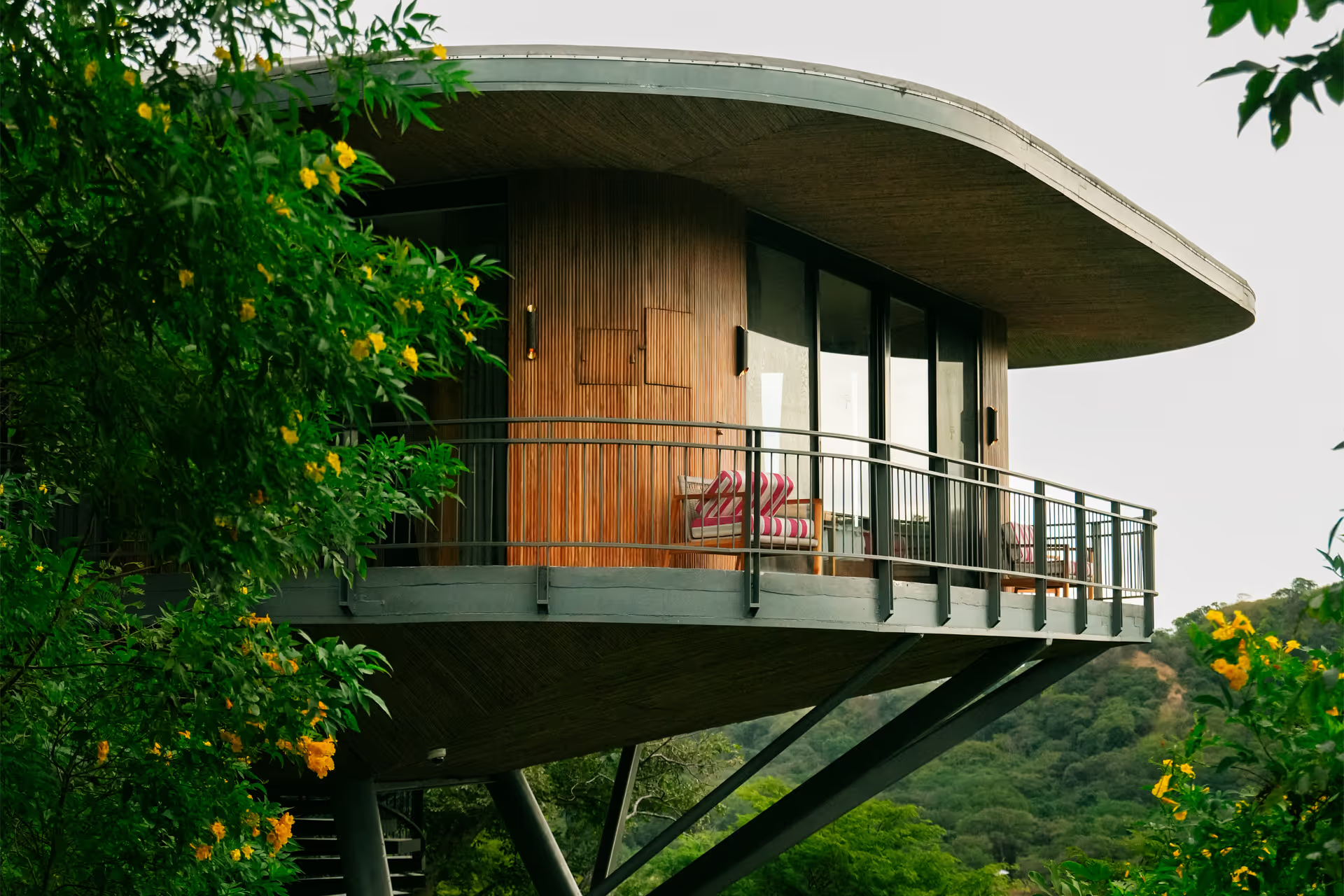
The beach hotels here range from simple guesthouses to proper luxury resorts. After spending most of your trip moving between cities every few days, staying in one spot for three or four nights feels earned. Swim in the morning, maybe get a massage, eat fresh seafood, repeat. This is the part of the trip where you don't set an alarm.
Why This Combination Actually Works
India alone can be exhausting. It's amazing and you should definitely go, but it's a lot to process. The crowds, the constant activity, the sensory overload, it's all part of the experience, but it takes energy. Adding Sri Lanka balances the trip out. You get the big monuments and intense cultural experiences you came for in India, then you shift to something calmer in Sri Lanka.
The logistics work well too. India to Sri Lanka is a short direct flight, about three hours from Delhi or Chennai to Colombo (subject to current routing). Many people already need Indian visas for travel, and Sri Lanka's visa is straightforward: you can get it online before you go (subject to current regulations). The time zones are similar (just 30 minutes difference), so you're not dealing with jet lag between countries.
One long international flight from Manila gets you access to two very different countries. You're maximizing your vacation time instead of using it all just to get to one destination.
What Access Travel Actually Does
India and Sri Lanka are not difficult countries to visit, but many small details can complicate things if you're planning on your own. Which guides actually know their history versus which ones just memorize basic facts from guidebooks. Which trains to book versus which sections are better done by private car. Which tea estates are worth visiting versus which are just tourist traps. Beach hotels that look amazing in photos versus those that actually have good service and clean rooms.
Access Travel handles all of this. We work with guides who have been doing this for years and actually know what they're talking about. We book hotels that our team has personally checked out. We time the itineraries so you're not rushing through everything, but you're also not wasting entire days just traveling between places.
The India portion is where good planning really matters. The cities are chaotic, and having someone who knows how to navigate them makes a huge difference. We arrange early morning Taj Mahal visits before the crowds arrive. We book rickshaws with drivers who won't try to take you to their cousin's overpriced shop. We make restaurant reservations at places that serve actual good food, not just the tourist restaurants near the hotels.
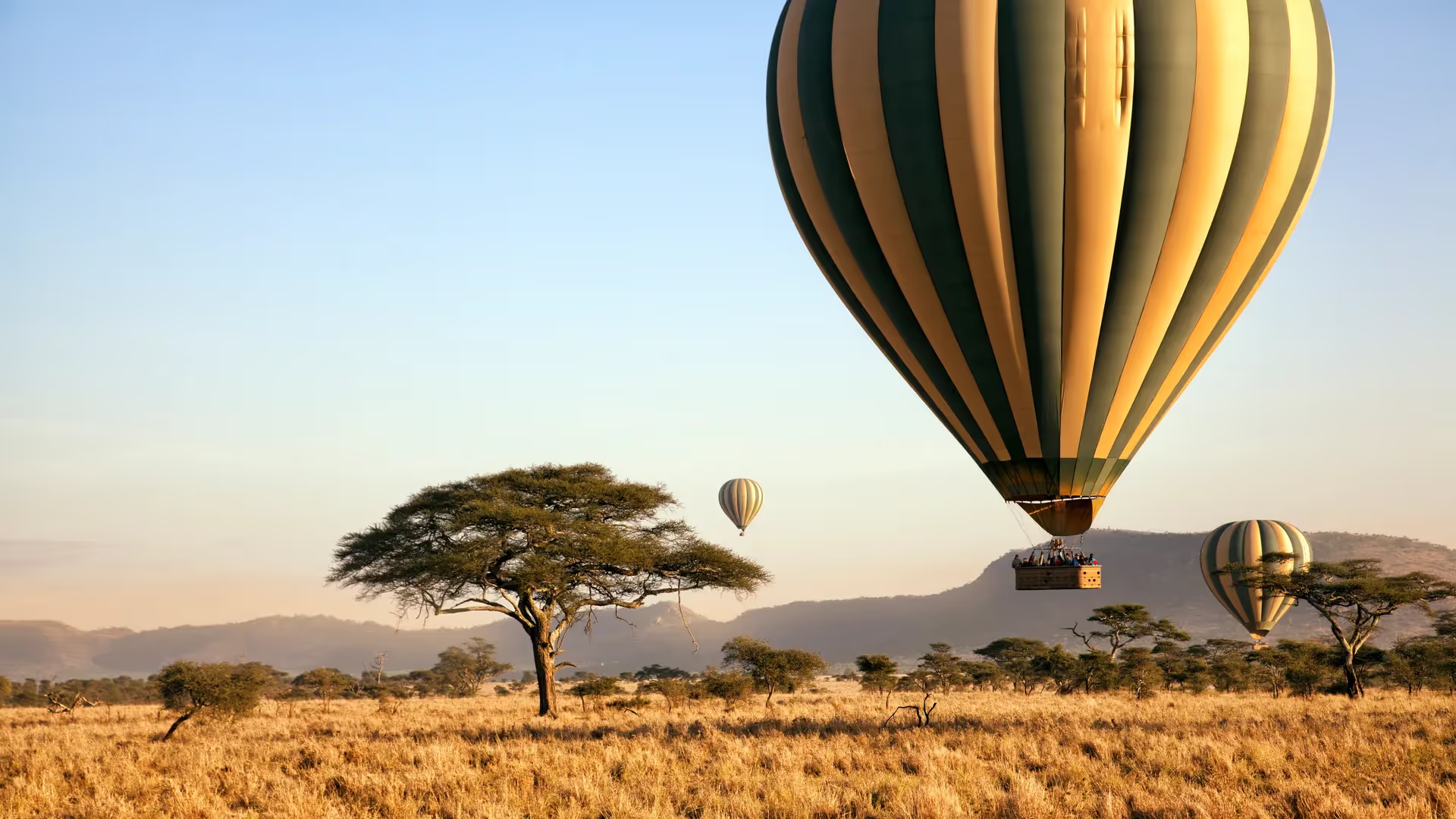
In Sri Lanka, we make sure you get seats on that scenic train journey (those book up fast). We arrange safaris at times when you're most likely to see wildlife. We book beach hotels that match what you're actually looking for: whether that's family-friendly, romantic or just quiet and well-maintained.
Both countries need planning for a smooth trip. Hotels in popular areas fill up during peak season. Train seats on the famous Kandy to Ella route sell out weeks in advance. Having everything pre-arranged means you don't spend your vacation time standing in lines or trying to figure out logistics.
When to Actually Go
The sweet spot for this combo is roughly November to March, when North India is cooler, and Sri Lanka's southwest coast has its driest weather. You might still get the odd shower, especially during seasonal transitions, but overall conditions are ideal for sightseeing and beach time.
December and January are peak tourist season, which means higher prices and more crowds at major sites, but also the best weather conditions. February and March are slightly less crowded but still have great weather. November works well too, though there's a chance of some rain in Sri Lanka as the monsoon season transitions.
If you can be flexible with your dates, traveling outside peak season (early November or late March) can save you money and mean fewer crowds without sacrificing weather quality.
If you are ready to experience India's energy and Sri Lanka's calm in one trip, talk to us. Access Travel handles everything: visas, hotels, guides, transportation. You can focus on enjoying two incredible countries without the stress of coordinating it all yourself. Let's plan something that balances cultural immersion with actual relaxation, because you deserve both.