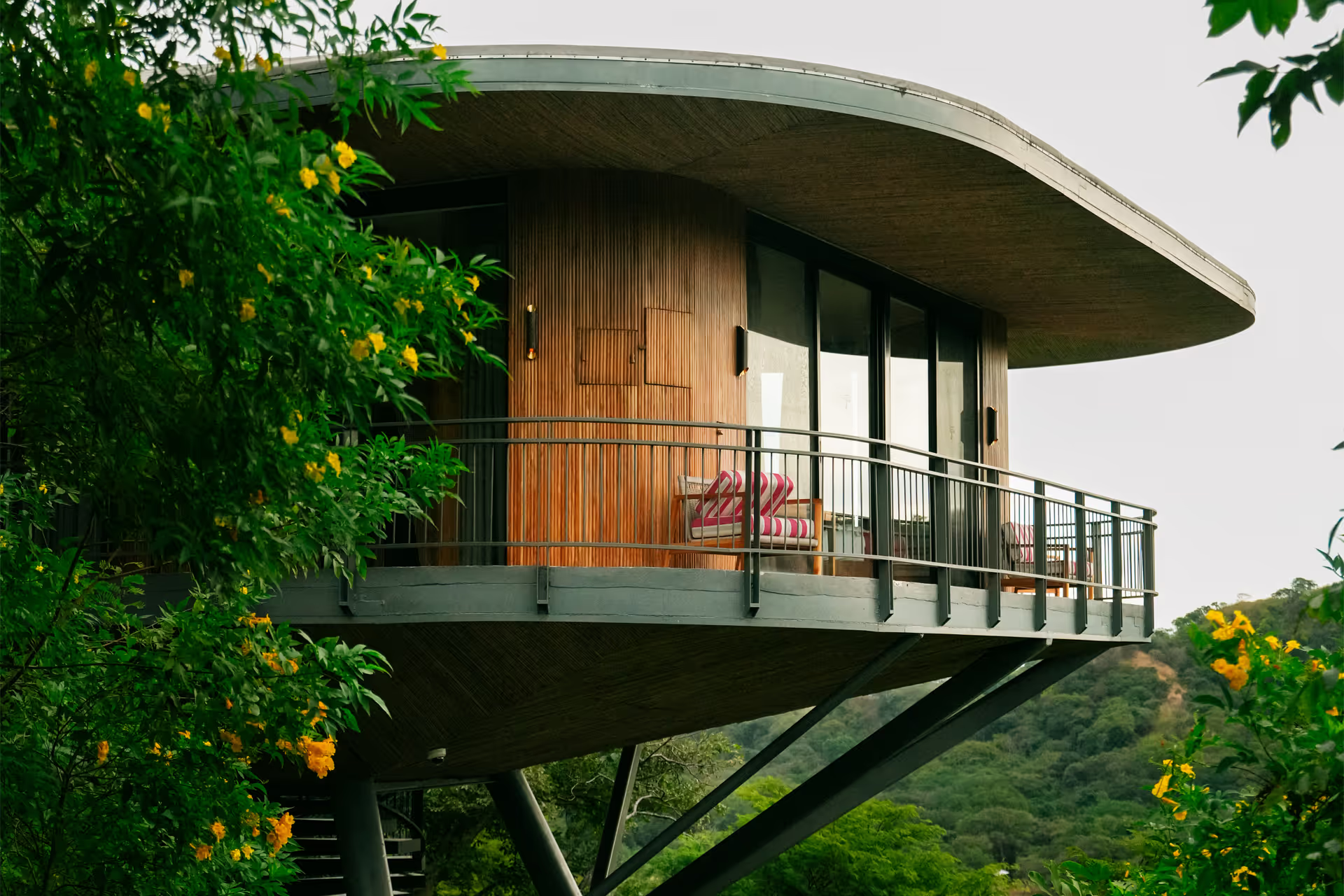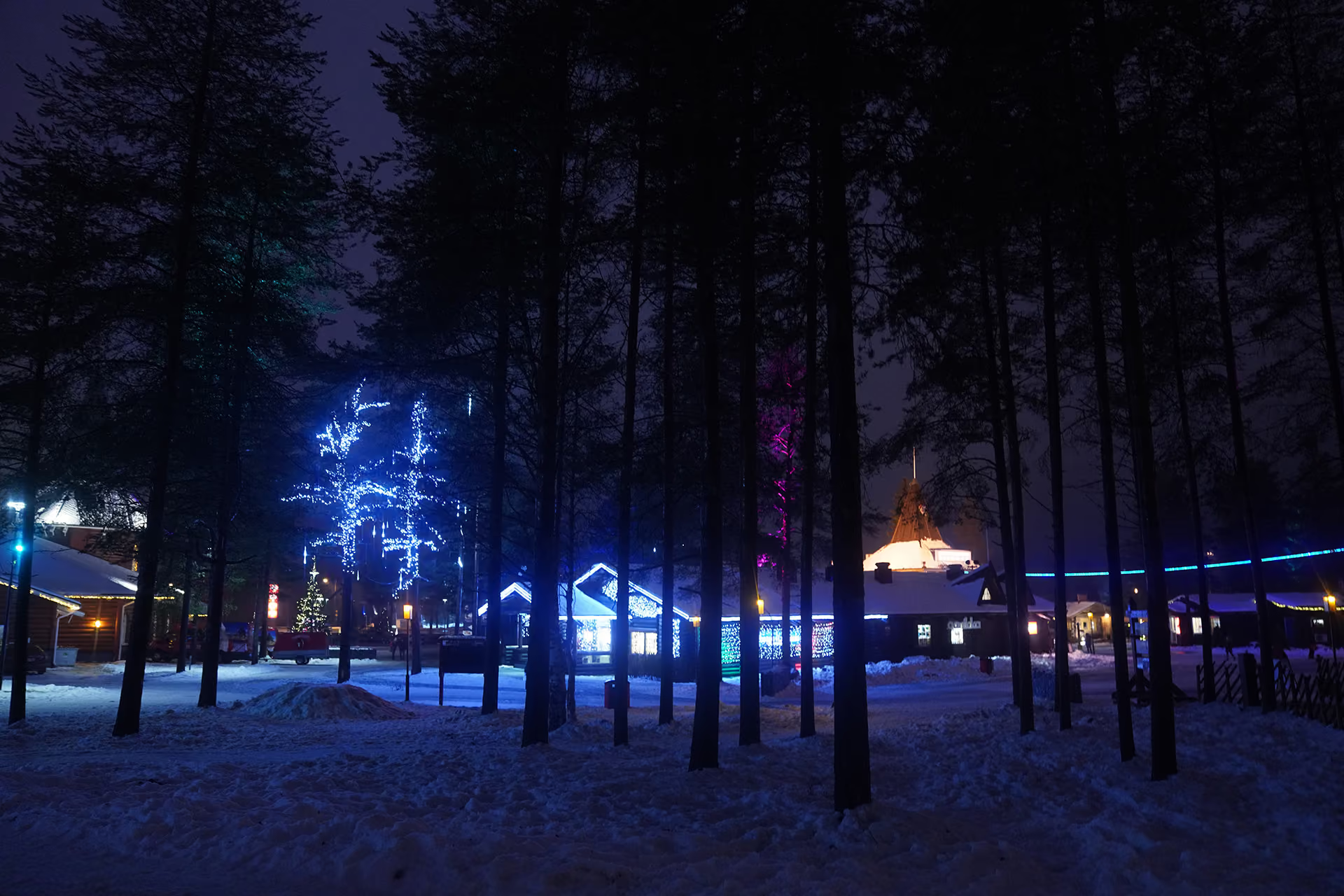
Here is the part most Northern Lights articles leave out. You can fly halfway around the world, stay in the perfect glass cabin, and still not see the aurora.
The lights don't follow a schedule. They depend on solar activity, weather, cloud cover, moonlight, and a fair amount of luck on top of all that. No tour operator can guarantee a sighting, and the ones who pretend otherwise are the ones to be careful of.
What you can do is shift the odds. Pick the right destination for the kind of trip you want. Stay long enough for nature to give you a chance. Get away from city lights. Use guides who know which valley will be clear when everywhere else is cloudy. Build a trip that's beautiful even on the nights the sky stays quiet.
And in 2026, the odds are unusually good. NASA and NOAA announced in late 2024 that the Sun had reached the solar maximum phase of Solar Cycle 25, the active part of the eleven-year solar cycle when sunspots and geomagnetic storms increase. That window can extend for some time after the announcement, which means 2026 sits inside one of the strongest aurora planning periods we'll have for the next decade. Plenty of reason to go now.
When to Plan the Trip
The aurora season runs roughly from late August through early April, depending on where you go. Within that window, the best months are usually September through October and February through March, when the nights are dark and the equinox tends to spike geomagnetic activity. Mid-winter (November to January) gives you the longest, darkest nights, but the weather can be more punishing.
Inside any given night, the prime viewing window is between 10 p.m. and 2 a.m. across most Arctic destinations. That matters for trip planning, because it means your nights will run late and your mornings should run slow. Build the itinerary accordingly.
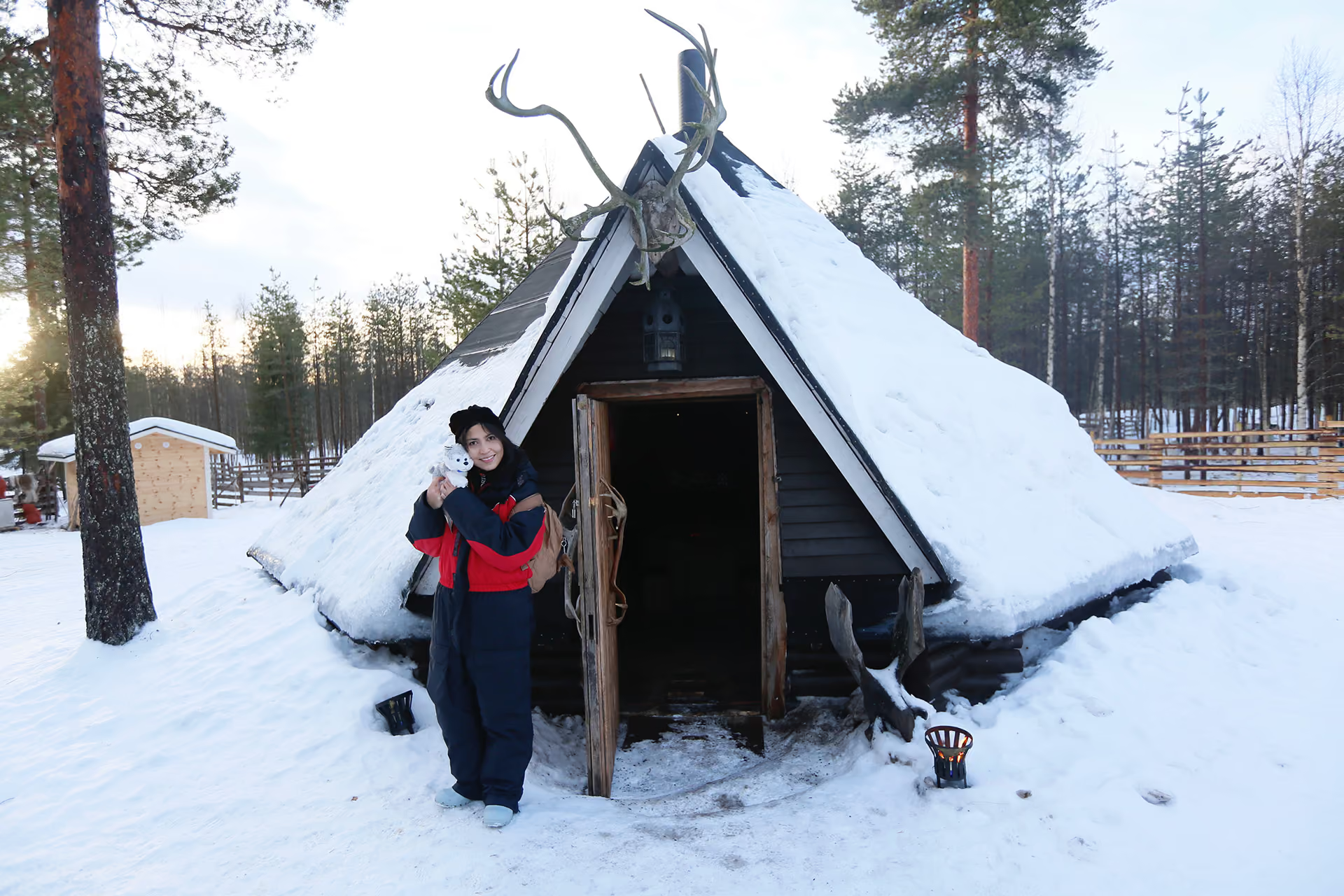
Norway: The Best All-Around Choice
If this is your first aurora trip and you want the strongest combination of accessibility, comfort, and chances, start with Northern Norway.
Tromsø is the easiest base. Direct flights connect from across Europe, the city itself is comfortable, and the surrounding fjords and mountains give you serious darkness once you drive twenty minutes out. Local guides here are some of the most experienced in the world. They check the forecast every afternoon and decide where to drive based on where the sky will be clearest, sometimes covering several hours of road in a night to chase a hole in the clouds.
Tromsø does get busy in peak winter, especially around Christmas and February. If you want a quieter version of the same experience, the alternatives nearby are excellent. Alta is smaller and more focused, with the original Sorrisniva Igloo Hotel and some of the most reliable aurora skies in the country. Senja offers extraordinary scenery with a fraction of the crowds. Lyngen has remote luxury lodges with private aurora viewing rooms.
For travelers who want to push further, Kirkenes sits near the Russian border and is the quieter end of the classic Hurtigruten coastal cruise from Bergen. Svalbard, deep in the Arctic, gives you polar night experiences from late October to mid-February. The aurora odds are excellent and the landscape is unlike anywhere else on Earth.
Norway is best for travelers who want adventure (dog sledding, Sami culture, whale watching, fjord cruises) alongside the lights. The trip stays interesting even on the nights the sky doesn't cooperate.
Finland: The Cozy, Family-Friendly Pick
Finland is the destination for travelers who want the lights without giving up comfort. Lapland is built for winter the way few places in the world are.
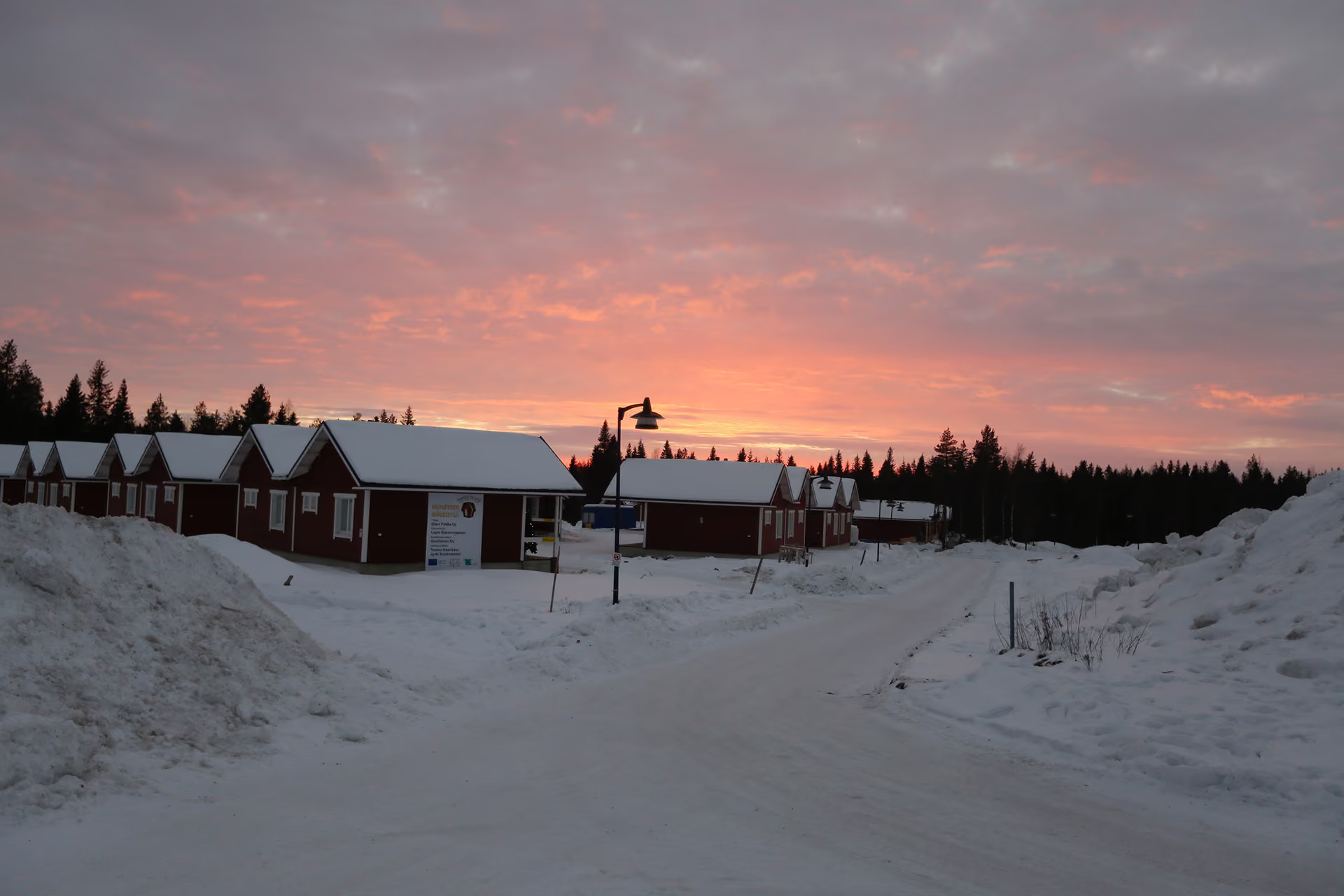
Rovaniemi is the most accessible Lapland base. It's the official home of Santa Claus Village, which makes it especially good for families with younger children. The aurora is visible from town, but the real viewing happens a short drive out, where frozen lakes and open fells give you the open sky and dark horizon you need. Most lodges arrange transfers to dedicated viewing spots and have aurora alarms in your room so you don't miss a display while you're sleeping.
Further north, Saariselkä, Levi, and Ylläs offer a quieter Lapland experience with fewer crowds and stronger wilderness feel. This is also where you'll find the famous glass igloos at Kakslauttanen and similar properties. Sleeping with the sky directly overhead is the kind of detail that makes the trip feel truly designed.
Finland is best for travelers who want a complete winter holiday: reindeer safaris, husky sledding, snowshoeing, ice fishing, traditional Finnish saunas, and the lights as the headline event. It's also the most family-friendly aurora destination, with shorter excursions and more daylight comfort than Norway or Iceland.
The aurora season in Finland runs late August through early April, with peak activity around September to October and February to March. After mid-April, the nights become too light, and the season effectively ends.
Iceland: The Most Visually Dramatic
Iceland is not the highest aurora-probability destination on this list, but it might be the most beautiful one. Few things in travel are as memorable as watching the sky glow above a black-sand beach, a glacier lagoon, or a thundering waterfall.
The country also offers something the others don't: full daytime experiences that rival the night ones. The Golden Circle, the South Coast, the Snaefellsnes Peninsula, the geothermal lagoons (Sky Lagoon and the original Blue Lagoon among them) all happen during the day. Even if the aurora hides for your entire trip, you've still seen one of the most extraordinary landscapes on the planet.
For aurora viewing, the best spots are well outside Reykjavik. Thingvellir National Park is close enough for an evening trip and offers dramatic geological foreground. Jokulsarlon Glacier Lagoon is exceptional, with the lights reflecting off floating icebergs. Vik and the surrounding south coast give you long, open horizons. Myvatn Lake in the north sits in one of the country's most reliably dark areas and pairs naturally with a slower northern Iceland route.
The trade-off in Iceland is the weather. Conditions change quickly, and a clear sky at 8 p.m. can become heavy cloud cover by 11 p.m., or the other way around. This is one destination where private guiding genuinely earns its cost. A good local guide knows how to chase the weather and will drive you to wherever the cloud break is, even if that means an hour east at 1 a.m.
The Iceland aurora season runs from late August or September through mid-April, with the deepest darkness from November to January.
Sweden: The Underrated One
Most aurora articles skip past Sweden, which is a mistake.
Abisko National Park, in Swedish Lapland, sits inside what locals call the "blue hole," a small pocket of consistently clear sky created by the surrounding mountains. The result is some of the most reliable aurora-viewing weather in the entire Arctic. Even when nearby Tromsø and Kiruna are clouded over, Abisko often stays clear.
Kiruna, Sweden's northernmost city, makes a comfortable base. It's also home to the original Icehotel, where suites are sculpted fresh every winter from ice harvested from the Torne River. Sleeping in a room carved entirely from ice is one of those experiences that becomes a story for life.
Sweden suits travelers who want strong aurora reliability with a quieter, more design-driven feel. It's also a good fit for photographers who care most about clear-sky odds.
Iceland vs Norway vs Finland: Which One Fits You
This is the comparison most travelers actually want, so here's the honest version.
Choose Norway if you want the strongest combination of comfort, infrastructure, expert guiding, and Arctic adventure. It's the best all-around aurora destination for travelers who want a real chance of seeing the lights without sacrificing the rest of the trip.
Choose Finland if you want a cozy winter holiday that happens to include the aurora. Glass cabins, reindeer safaris, family-friendly pacing, and the kind of soft snowy stillness that defines a Lapland Christmas card.
Choose Iceland if the landscape matters as much as the lights. You're more likely to come back with the iconic photograph of an aurora over a glacier or waterfall, and even on a quiet aurora night, the country itself is the experience.
There is no wrong answer between the three. The right one depends on the kind of trip you're after.
How to Actually Improve Your Chances
Beyond destination, a few choices make the real difference.
Stay long enough. Three nights minimum, four to five if you can manage it. Travel Alaska found that travelers in Fairbanks who actively go out every night for at least three nights have a 90 percent chance of seeing the aurora. That math holds across most Arctic destinations. A two-night trip is a gamble. A four-night trip is a planning decision.
Get out of the city. Reykjavik, Tromsø, and Rovaniemi all have aurora visible from town, but city light pollution will dim what you see. The displays you remember happen in the dark countryside, twenty to forty minutes outside the urban areas. This is one of the strongest arguments for using a guide rather than relying on your hotel window.
Watch both forecasts. The aurora forecast (which measures geomagnetic activity, usually on the Kp scale) tells you whether the lights are likely to appear. The weather forecast tells you whether you'll be able to see them through the clouds. Both have to align. NOAA's Space Weather Prediction Center and local apps like My Aurora Forecast are reliable starting points.
Avoid the full moon. A bright moon washes out fainter aurora displays. If you have flexibility, plan around a new moon or the days on either side of it. This isn't always possible, but when it is, it's worth doing.
Build a trip that works without the lights. This is the most important rule. Northern Lights cannot be promised. The best aurora trips are designed so the daytime experiences (sled dogs, glaciers, hot springs, Arctic dining, Sami culture, fjord cruises) make the journey complete on their own. The lights are the bonus, not the foundation.
What Expert Planning Actually Adds
The Northern Lights are one of the few destinations where the difference between a good planner and a great one is measurable.
A good planner knows which lodges have aurora alarms, which ones have private viewing rooms, and which ones are far enough from town to be worth the location. They book guides who chase the weather instead of running fixed-route tours. They build in enough nights for the math to work. They arrange daytime experiences that match your interests and pacing. They handle the cold-weather logistics that quietly determine whether you enjoy the trip or endure it: thermal layers, the right boots, transfer timing that avoids the coldest hours.
When all of that is in place, you stop chasing the lights and start experiencing the Arctic. The aurora becomes the story your trip is most likely to be remembered for, but not the only thing the trip was about.
A Trip Designed Around the Sky
The Northern Lights cannot be scheduled. They can only be planned for, with the right destination, the right number of nights, the right guides, and the right kind of patience.
In 2026, that planning window is genuinely worth taking seriously. Solar activity is high, the destinations are ready, and the kind of trip that gives you the best chance of seeing the aurora also happens to be one of the most memorable winters you can have, sky or no sky.
Ready to plan your aurora trip the right way? Speak with an Access Expert and we'll design a Northern Lights journey around your pace, your preferences, and the kind of Arctic experience that makes the trip worthwhile from the first morning.