Most travelers treat Turkey and Greece as two separate trips, saved for two separate years. Look at a map of the Aegean, though, and the logic reverses itself. The Turkish coast and the Greek islands sit within sight of each other across a narrow stretch of water, connected by ferries that take under an hour and flights that take under ninety minutes. Once you see how close they are, planning them as one continuous journey stops feeling ambitious and starts feeling obvious. Here is how to think about a combined Turkey and Greece itinerary:
- why the two countries belong on the same route
- how long to give yourself
- what to prioritize in each and when to go
- how a custom planner helps you
Why Combine Turkey and Greece
Turkey and Greece share the Aegean, and for long stretches of history they shared the same cities. Ephesus on the Turkish coast was founded by Ionian Greek colonists and grew into one of the great cities of the classical world. Istanbul, as Constantinople, was the seat of the Byzantine Empire that shaped the Orthodox world across both shores. Traveling from one country to the other is not a jarring switch. It is following a single thread of history as it crosses the water.
The practical case is just as strong. The two countries face each other directly, so you are never doubling back. You can spend the first half of your trip moving through Turkey's interior and coast, cross the Aegean once, and spend the second half island-hopping through Greece, all without a long-haul flight in the middle.
For Philippine passport holders, the visa sequence also works in your favor. Greece is part of the Schengen Area, so you will apply for a Schengen visa. Turkey requires a visa as well, and holding a valid Schengen visa makes you eligible for Turkey's convenient electronic visa rather than a full embassy application. One approval effectively supports the other, which is exactly the kind of detail we sort out for you before you travel.
Suggested Route & Trip Length
A combined Turkey and Greece trip works best across roughly twelve to sixteen days. That gives each country real time rather than a rushed sampling, with a single crossing in the middle.
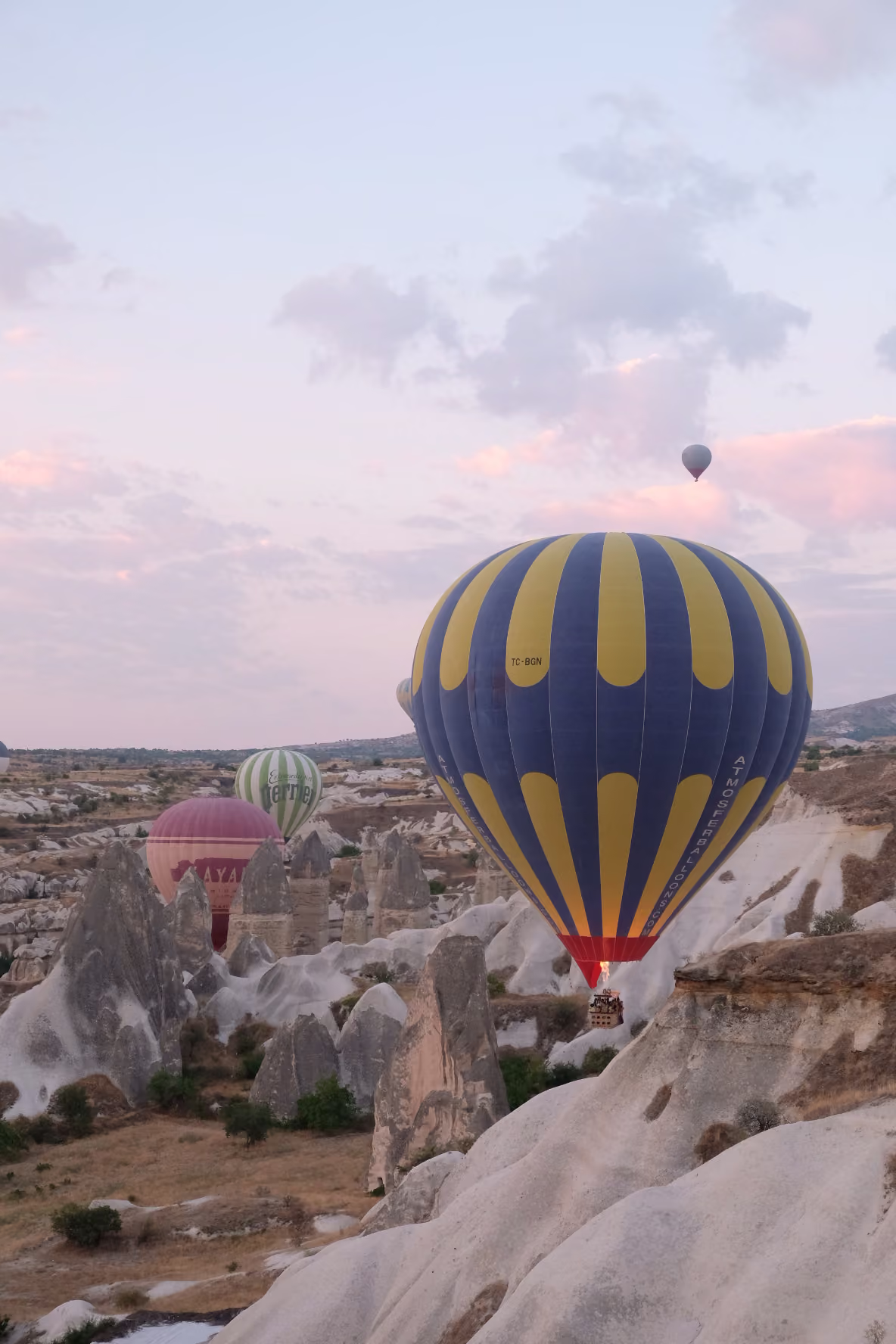
The natural direction runs from Turkey into Greece. Begin in Istanbul for two to three nights, enough to absorb the old city and the Bosphorus without exhausting yourself. Fly inland to Cappadocia for two to three nights, building in a buffer for the sunrise balloon flight, which is weather-dependent. Continue to the Aegean coast near Selçuk and Kuşadası for two nights to explore Ephesus and, if you have the appetite for it, the terraces of Pamukkale.
From the coast, you cross into Greece. The Kuşadası to Samos ferry is one of the quickest links, running daily from April through October and taking around thirty minutes to reach Samos Town. If you prefer to stay on land schedules, a short flight from İzmir or Istanbul reaches Athens in about an hour to ninety minutes, with very frequent service.
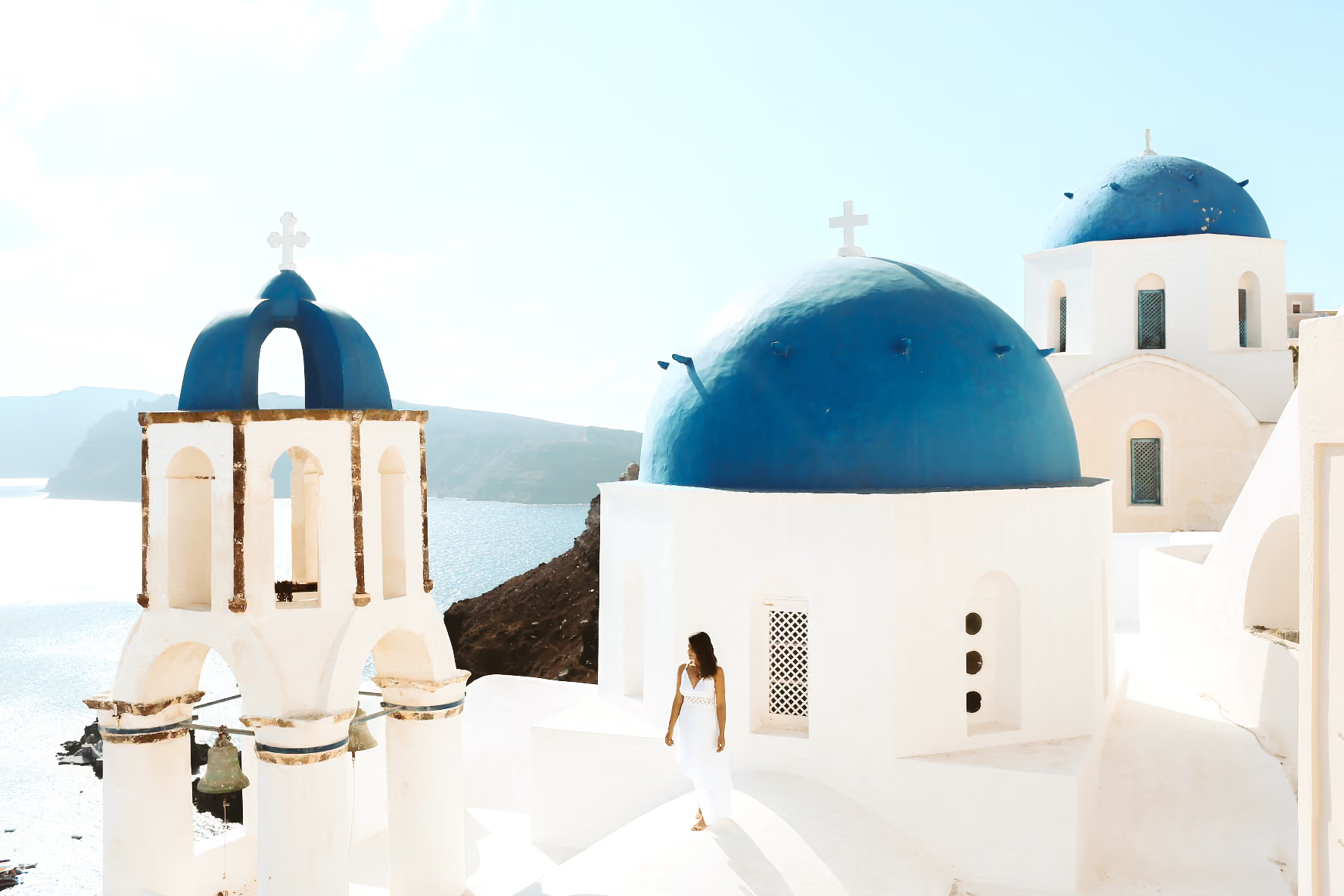
On the Greek side, give Athens two nights for the Acropolis and the old city, then continue to the islands. Santorini deserves three nights to see it beyond the midday crowds, and Mykonos adds two to three more, with its own gateway to the sacred island of Delos. You can return home from the islands or route back through Athens, depending on your flights.
This is one clean shape for the trip. The order can flex around your interests, your arrival city, and the season, which is part of what we tailor when we build the itinerary around you.
Top Highlights in Each Country
In Turkey, Istanbul anchors the start. The Hagia Sophia, built as a Byzantine basilica in the sixth century and later a mosque, remains one of the most significant buildings in the world, and its reopened upper gallery holds the famous Byzantine mosaics. Nearby, Topkapı Palace, the Blue Mosque, and the Grand Bazaar form the classic Sultanahmet cluster, and a Bosphorus cruise gives you the city from the water, Europe on one bank and Asia on the other.
Cappadocia is the emotional high point for many travelers. The valleys around Göreme are filled with the eroded rock formations known as fairy chimneys, hollowed out over centuries into cave churches and underground cities, and now home to some of the region's most distinctive cave hotels. The sunrise hot-air balloon flight is the signature experience, and it flies only at first light, when the winds are calm.
Down on the Aegean coast, Ephesus lets you walk a genuinely intact ancient city. The reconstructed façade of the Library of Celsus and the Great Theatre, which once held around twenty-five thousand spectators, are the standouts, with the optional Terrace Houses revealing the mosaics and frescoes of Roman family life.
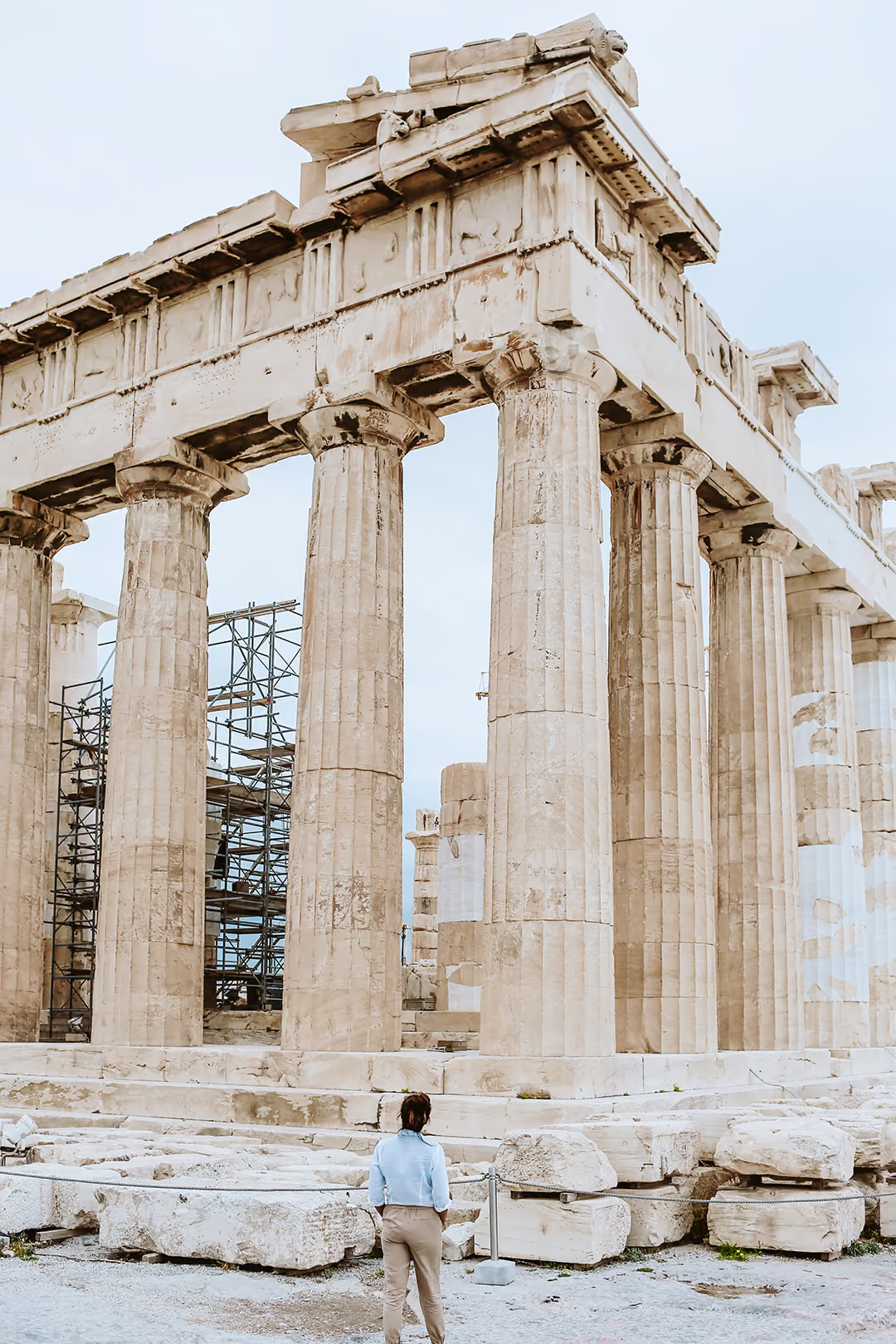
In Greece, Athens opens with the Acropolis, the sacred rock crowned by the Parthenon and coordinated under Pericles during the city's fifth-century golden age. The separate Acropolis Museum is worth pairing with the site itself. From there, the islands take over. Santorini is a dormant volcano whose Bronze Age town of Akrotiri, buried by eruption around 1600 BC, is often called Greece's Pompeii, and a sunset caldera sail remains its defining experience. Mykonos balances its beaches and design-led town with a short boat crossing to Delos, the mythological birthplace of Apollo and Artemis and one of the richest archaeological sites in the Mediterranean.
Best Time to Travel
The Aegean rewards the shoulder seasons. Late April through June and September into October give you warm, settled weather, ferries running on full schedules, and noticeably thinner crowds than the peak of summer.
There are concrete reasons to favor these windows. In Cappadocia, balloon flights are far more likely to go ahead outside the winter months, when cancellations are common, so spring and autumn give you the best odds of flying on your first morning. In Athens, midsummer heat can push past forty degrees, and the Acropolis has closed during the hottest afternoon hours on several days across recent summers, which is a real risk for a July or August visit. On Santorini and Mykonos, the shoulder months mean the towns breathe again between cruise arrivals, and staying overnight lets you enjoy the villages early and late in the day when the day-trippers have gone.
High summer is not off the table, particularly if your dates are fixed around school holidays. It simply asks for smarter scheduling: early starts, timed entries booked well ahead, and island stays chosen to sidestep the busiest hours. That scheduling is something we handle as a matter of course.
Booking a Custom Turkey & Greece Journey
A combined Turkey and Greece itinerary has a lot of moving parts. Timed-entry tickets for the Acropolis, weather buffers for the Cappadocia balloons, the Aegean ferry or the İzmir to Athens flight, cruise-season logistics on the islands, and two separate visa processes all have to line up. Booked piece by piece, it becomes a project. Designed as one journey, it becomes a trip you simply arrive for.
That is the work we do. Access builds the route around your pace and your interests, secures the premium stays and private guides in each city, and coordinates every transfer and crossing so the two countries feel like one continuous experience rather than two trips stitched together.
You can start from our Meet Turkey and Greece experience for a sense of how the journey comes together, explore more of our curated routes through Access Journeys, or, if the Mediterranean has your attention, see how we approach Spain and Portugal as a combined trip on the western edge of the sea.
When you are ready to shape your own version, plan your trip with us and we will design a Turkey and Greece itinerary that is entirely your own. Prefer to talk it through first? Reach our team and we will take it from there.