There is a particular kind of quiet that settles over Lapland once the sun drops for the day. There is no traffic. You’ll just experience snow underfoot and a sky that seems built for one purpose – to put on a show. Finland sits directly beneath the auroral oval, which is why it remains one of the most reliable places on earth to see the Northern Lights, with the far north recording clear displays on as many as 200 nights a year. Getting there is easy. Getting there at the right time, in the right place, dressed for the cold, is where the experience is designed.
This guide walks through what you need to know and how an Access Travel itinerary brings it all together. If you are already picturing yourself under a glass roof waiting for the sky to shift green, keep reading.
Best Time to See the Northern Lights
Finland's aurora season runs from late August through early April, the stretch when nights are dark enough for the lights to register against the sky. Within that window, September to October and February to March are consistently the strongest, thanks to the equinoxes, which trigger measurably higher geomagnetic activity while still offering milder temperatures than deep winter.
December and January bring the longest, darkest nights and the scenery most people picture when they think of Arctic Finland. They also bring the coldest conditions and the busiest, most expensive dates around the holidays. There is no wrong time to go. There is a version of the trip suited to how much cold you want and how much company you are willing to share the sky with.
On any given night, the most active window tends to fall between 9pm and 2am, with activity often peaking near midnight. Clear skies are never guaranteed, which is why we build in several nights above the Arctic Circle rather than one. A single cloudy evening should never be the difference between seeing the lights and going home without them.
Top Viewing Locations in Finland
Anywhere north of the Arctic Circle offers a real chance at the aurora, but odds and infrastructure shift considerably depending on where you base yourself.
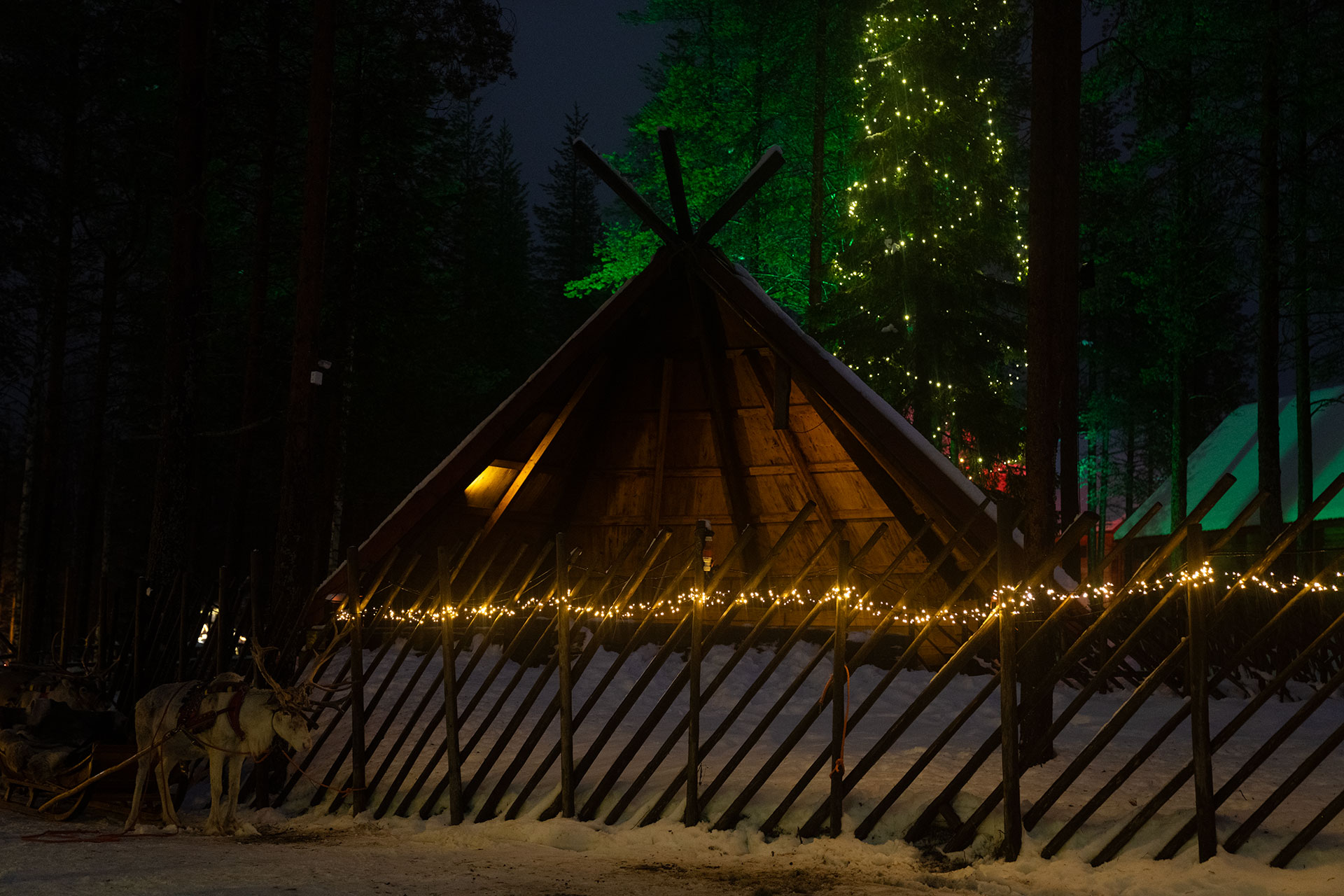
Rovaniemi is the most accessible gateway, with direct flights and the widest range of hotels and activities. It is also where you will find the real Santa Claus Village, worth a stop for the postcard sent from the Arctic Circle post office alone. Because of the town's lights, most visitors take a short drive out for the clearest view.
Levi combines the comfort of a ski resort with genuinely strong aurora odds just outside the village. It is the kind of place where you can spend the day on the slopes and the night watching the sky, without much travel between the two.
Further north, Saariselkä, Inari, and the remote Kilpisjärvi and Utsjoki deliver the darkest skies and the highest aurora frequency in the country, with some of these northernmost spots seeing clear-night visibility as high as 70 to 80 percent. Inari pairs strong odds with rich Sámi cultural experiences at the Siida Centre, while Saariselkä offers well-developed tour infrastructure, including glass-roof cabins built specifically for sky-watching.
For a custom Access Travel itinerary, we typically design around an accessible base, Rovaniemi or Levi, for the first stretch, with the option to extend further north for guests who want to maximize their odds.
What to Pack for Arctic Travel
Arctic Lapland calls for a three-layer system rather than one heavy coat. Start with a moisture-wicking merino base layer, add an insulating mid layer of fleece or wool, then finish with a windproof, waterproof outer shell. Pack two sets of thermal base layers so you always have a dry one on hand, along with a hat that covers the ears, a neck gaiter, mittens worn over thin liner gloves, and wool socks with boots sized up for extra warmth.
- Base layer: two sets of merino thermal tops and leggings, no cotton
- Mid layer: a fleece or wool sweater, plus a light down layer for temperatures below -20°C
- Outer layer: a waterproof, windproof winter jacket and insulated trousers (many properties provide thermal suits)
- Accessories: ear-covering hat, neck gaiter, liner gloves plus mittens, wool socks, headlamp, power bank, hand and toe warmers
- Easy to forget: swimwear for sauna and ice-hole dips, a rich face moisturizer and lip balm for the dry cold, and a tripod if you plan to photograph the sky
Custom Finland Itinerary Highlights
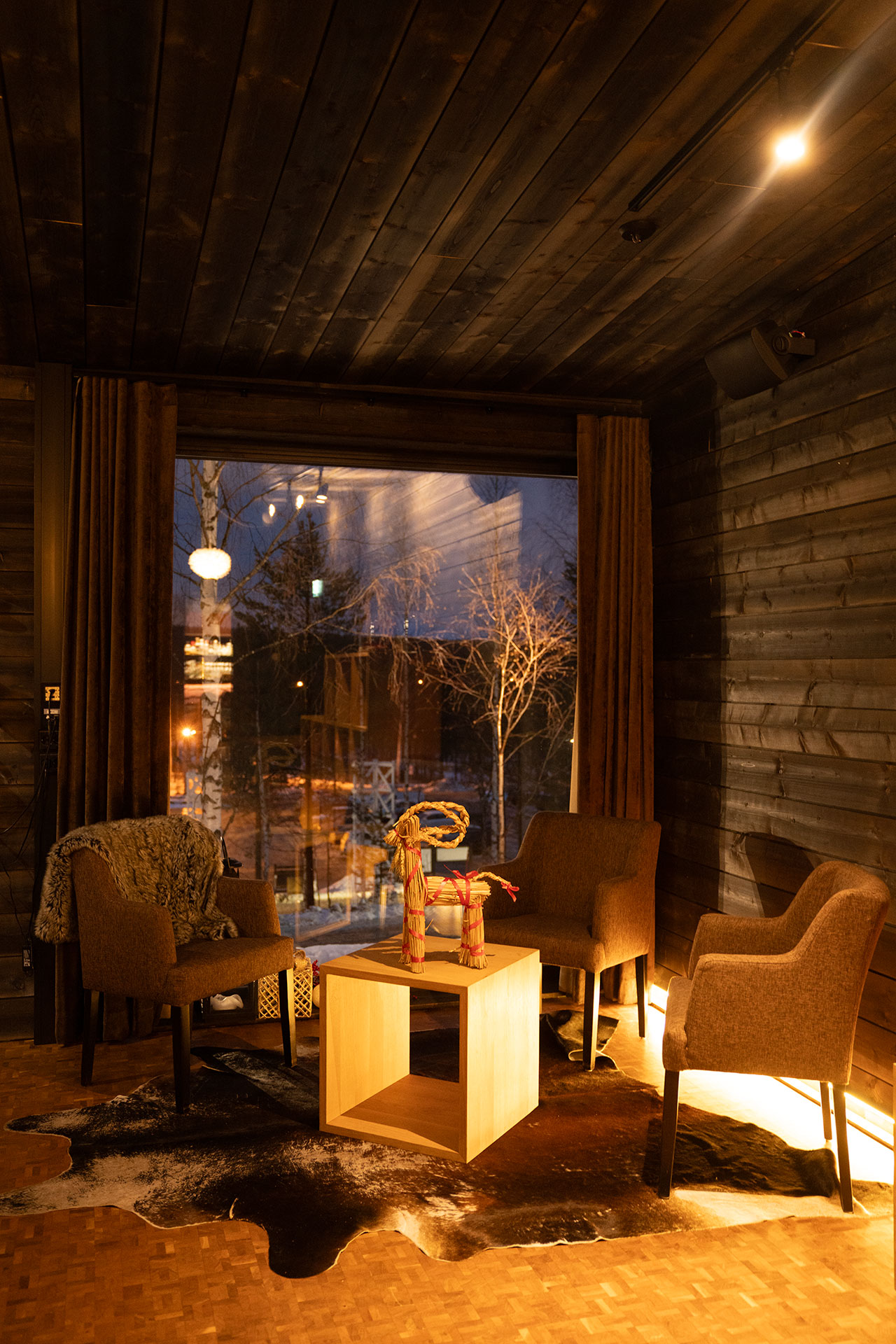
Access Travel's Finland journey, Meet -30°C Finland, is a 10-day itinerary designed for travelers who want the full Arctic experience without having to plan a single piece of it. It opens in Kittila, where the first night is spent in a glass igloo, sleeping beneath a domed window with the sky directly overhead. From there, days in Levi bring husky sledding, snowmobiling across the winter landscape, and skiing lessons on Levi's slopes, alongside evening aurora watches once the sky is dark enough to chase.
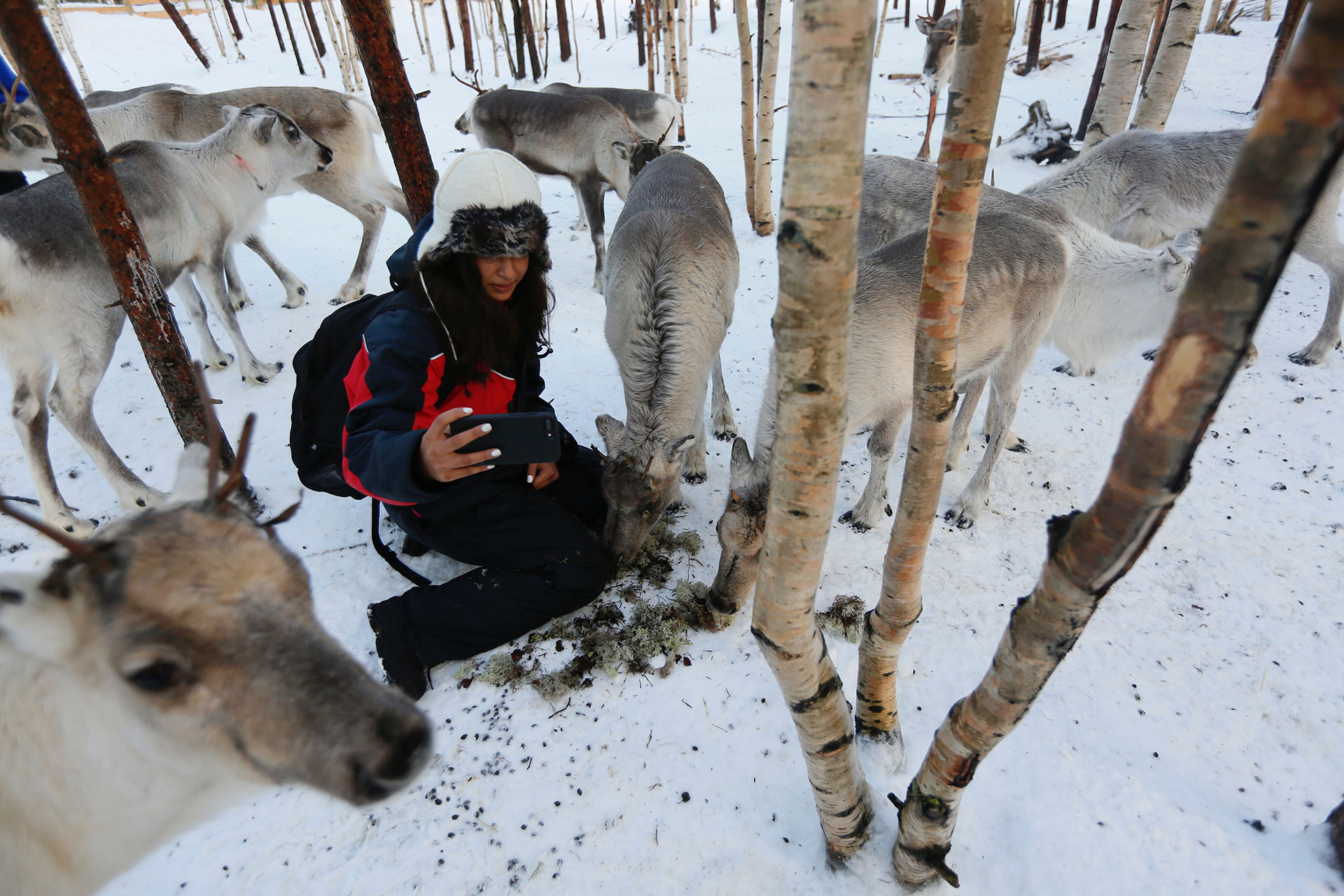
A visit to Rovaniemi's Santa Claus Village breaks up the days in Levi, and a two-hour sauna session at Arctic Sauna World on the shores of Lake Jerisjärvi, followed by a bracing dip in the lake, gives the trip its most restorative afternoon. A reindeer sleigh ride and a final husky run close out the adventure before the transfer home.
Every detail, hotel selection, private guide, transportation, and entrance fees, is handled before you land, and the pacing can be adjusted around your comfort with the cold and your travel dates. The journey starts from USD 11,499 per adult, with a lighter Meet Finland itinerary available from USD 10,999 for travelers who want the winter wonderland without the deepest freeze.
FAQs
When is the best time to see the Northern Lights in Finland? Late August through early April is the full season, with September to October and February to March offering the strongest activity alongside milder weather.
How many nights should I plan for aurora hunting? Three nights is a reasonable minimum, though five to seven gives the best odds, since weather and cloud cover shift from night to night.
Where in Finland has the best aurora odds? The far north, including Kilpisjärvi, Utsjoki, Inari, and Saariselkä, delivers the darkest skies and highest frequency, while Rovaniemi and Levi trade a small amount of odds for far easier access.
What time of night should I be outside? The most active window generally falls between 9pm and 2am, with activity often peaking near midnight.
Do I need special gear to see the aurora? No special gear is required to see it, but proper Arctic layering, a merino base, a fleece mid layer, and a waterproof outer shell, keeps you comfortable enough to stay out long enough to catch it.
If you are ready to see it for yourself, Access Travel designs every detail of your Finland journey, from the glass igloo you wake up in to the exact nights you spend chasing the sky. Explore the Finland experience or reach out to begin.
The Travel Club, Rockwell +63917 679 5338 inquiry@travelwithaccess.com www.travelwithaccess.com