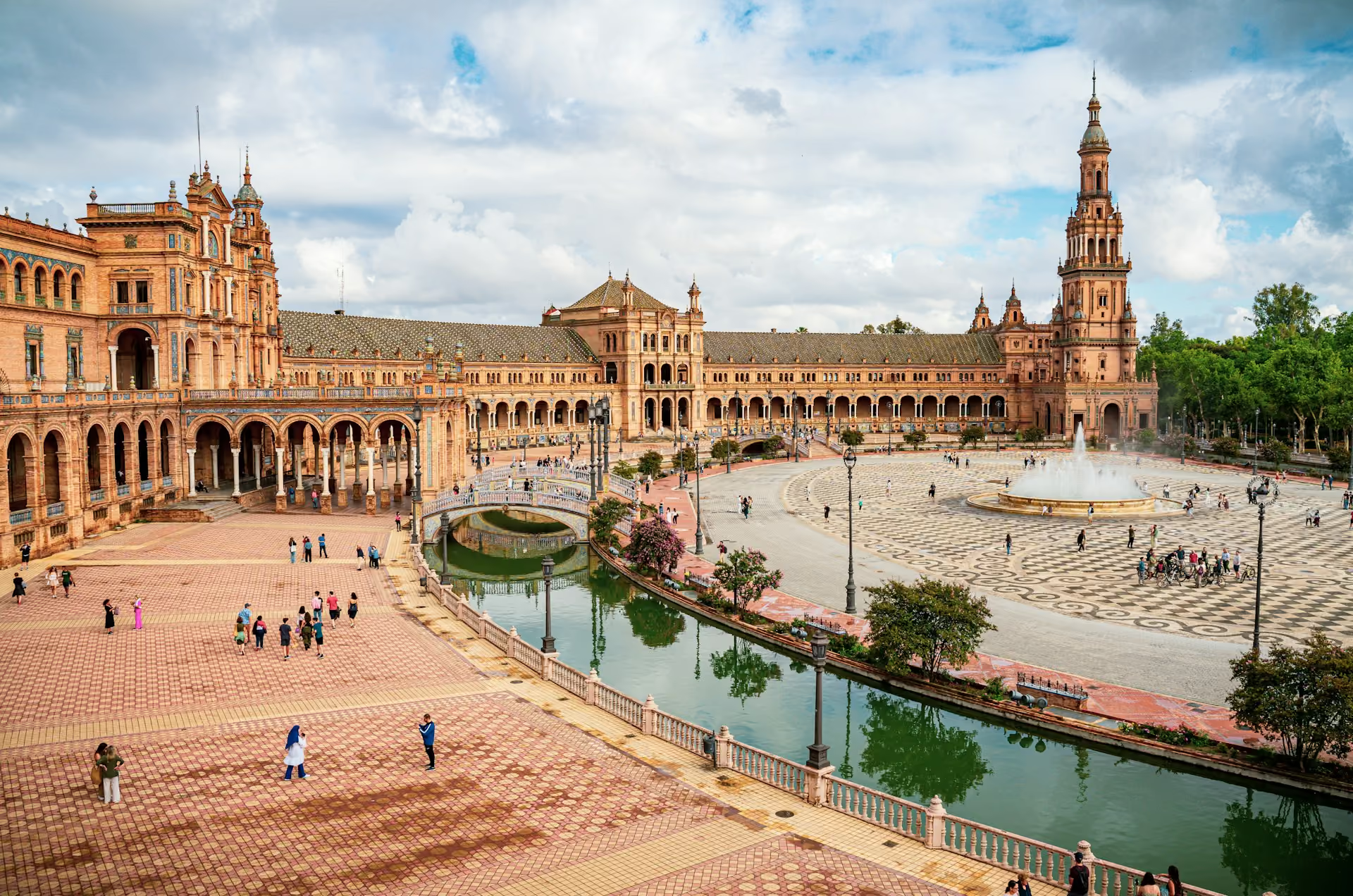
Most travelers plan Spain and Portugal as two separate trips. It is an understandable instinct. They are different countries, different languages, different rhythms. But the two share a peninsula, a border you can cross by car in under an hour in some stretches, and a history so intertwined that pulling them apart on a map does the journey a disservice. Planned as one route, Spain and Portugal read less like a checklist and more like a single, unfolding story: flamenco courtyards giving way to Atlantic cliffs, Moorish palaces giving way to cobbled fishing towns.
For Filipino travelers who have already done a first pass through Europe, Iberia is often the destination that rewards a second, deeper look. Here is how to think through the route, the timing, and the experiences worth building a journey around.
Why Spain and Portugal Pair Well
Spain and Portugal were shaped by many of the same forces: centuries of Moorish rule in the south, the Age of Exploration that sent both nations' ships across the Atlantic, and a shared Iberian identity that shows up in the architecture, the food, and the pace of daily life. Crossing between them is seamless. Both sit inside the Schengen Area, so once you are in, there are no internal border checks slowing the drive from Seville into the Alentejo, and a direct flight between Lisbon and Madrid takes roughly an hour, with similarly short connections on to Porto or Seville if a leg of the route calls for it.
The contrast is part of the appeal. Spain moves with a certain confidence: flamenco in Seville, tapas culture in Madrid, Gaudí's unfinished cathedral rising over Barcelona. Portugal is quieter and more contemplative, its cities built low along river mouths and coastlines, its rhythm set by the tide rather than the clock, carried by Fado, the wistful ballad tradition sung nightly in Lisbon's Alfama district. Both flamenco and the wider Mediterranean diet the two countries share, its rituals of long meals, olive oil, and shared plates, are recognized on UNESCO's list of intangible cultural heritage, a detail that speaks to how much of Iberia's appeal lives in ritual rather than sightseeing alone. Traveling both countries in one arc means the trip never settles into one register for too long.
Suggested Itinerary Flow
A route that works well begins in Barcelona and ends in Lisbon, moving generally from the northeast down through central Spain, into Andalusia, and across the border into Portugal.
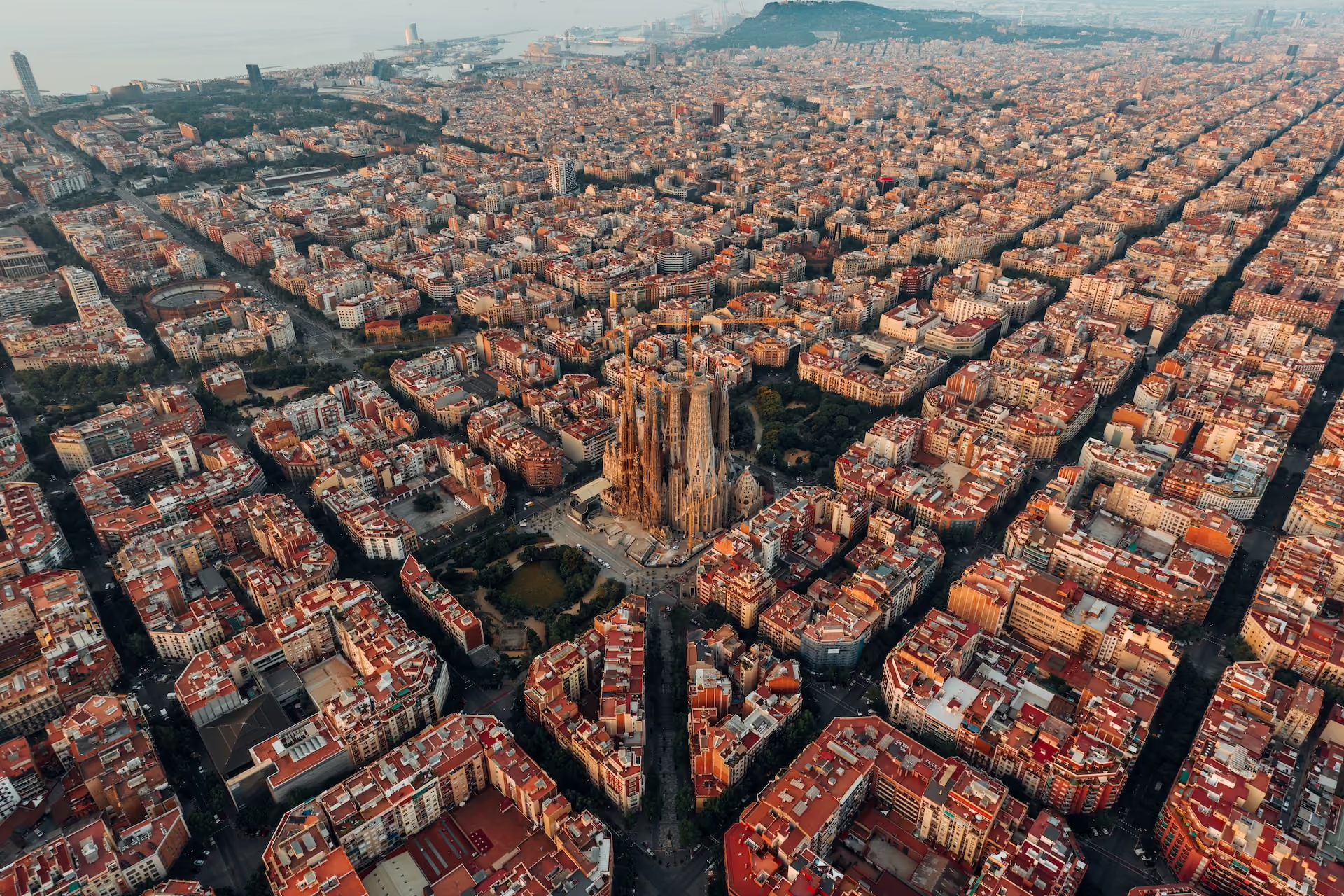
Start in Barcelona, where Gaudí's Casa Milà, Casa Batlló, and the Sagrada Família anchor two to three days of city exploration, with Montjuïc Hill offering the panoramic view that puts the whole city in context. From there, the route heads north and west through Basque Country, with a stop in Pamplona for its medieval old town and on to San Sebastián, where the Guipúzcoa coast delivers cliffside villages, Txakolí wine country, and a Basque culinary tradition that rivals anywhere in Spain.
The path then turns south toward Madrid, with a stop in Logroño for a Rioja wine tasting along the way. In the capital, the Prado Museum and the Royal Palace compete for a single afternoon, and neither disappoints. From Madrid, the route continues south into Andalusia: Granada for the Alhambra Palace and the Generalife Gardens, then Seville, where the Royal Alcázar and Seville Cathedral, both UNESCO World Heritage Sites, sit inside a city built for slow evenings and flamenco.
Crossing into Portugal, the route passes through Mértola, once a Muslim stronghold, and Évora, a UNESCO city known for Renaissance architecture, before arriving in Lisbon. From the capital, a day trip north takes in Fátima, one of the world's most visited pilgrimage sites, the dramatic Atlantic cliffs at Nazaré, and the walled medieval town of Óbidos.
Traced this way, Barcelona to Lisbon covers roughly fourteen days without feeling rushed, giving each region enough time to register before moving on.
For a different pace or a shorter window, a few other structures work well:
- Seven days: Stay within one country. Madrid, Seville, and Granada cover Spain's essentials without a single flight in between. Lisbon, Sintra, and Porto do the same for Portugal.
- Ten to twelve days: Barcelona, Madrid, Seville, Granada, and Lisbon, with one short flight bridging Spain and Portugal, gives a balanced first look at both countries.
- Fourteen to sixteen days: The full circuit above, often extended to include Toledo, Córdoba, and Cádiz on the Spain side.
- Seventeen days or more: A slower version of the same route, with added time in Ronda, Coimbra, the Douro Valley, and Cascais for travelers who prefer fewer transitions and more time in each place.
Travelers who want to lead with trains rather than a private driver sometimes follow a route that moves in a single direction along the coast, from Vigo in Galicia down through Porto, Coimbra, and Lisbon, then east along the Algarve to Seville, Cádiz, and Granada. It is a logical way to sequence the trip by rail, though a private itinerary allows the same regions to be covered without the fixed timetables.
For a Portugal-only escape, a compact loop works well on its own: three nights in Lisbon, one night in Sintra or Cascais, two nights in the Douro Valley, and two nights in Porto, tracing the country's shift from capital city to fairytale hill town to wine country to second city in about a week.
Regional Highlights
Barcelona is Gaudí's city: Casa Milà, Casa Batlló, and the still-unfinished Sagrada Família, framed by Mediterranean beaches and the market stalls of La Boqueria.
Catalonia and the Basque Coast bring architecture and coastline together, from Barcelona down through the Guipúzcoa coast, where fishing villages and soaring cliffs lead to San Sebastián's pintxos bars and Getaria's vineyards, home to Txakolí, a crisp white wine rarely found outside the region.
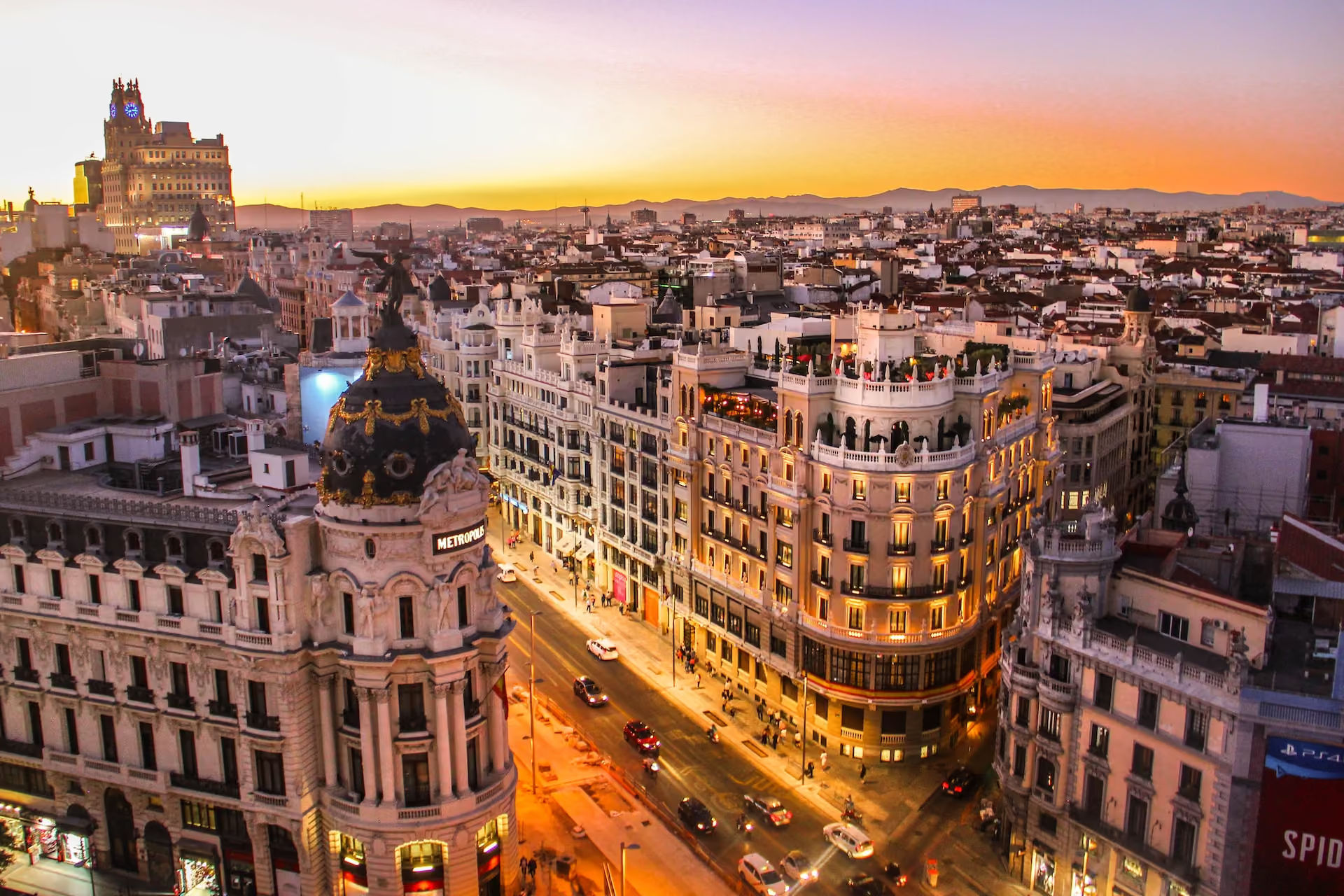
Central Spain, anchored by Madrid, offers the country's most concentrated collection of art and monarchy: the Prado's collection, the Royal Palace's state rooms, and a tapas and nightlife scene that runs late. A short trip out of the capital reaches Toledo's walled old city, once the seat of Spain's three great faiths.
Andalusia is where the Moorish influence is most visible: the Alhambra's intricate tilework and the Albaicín's old Moorish quarter in Granada, the Royal Alcázar and flamenco tradition in Seville, and whitewashed hill towns like Ronda, split by a dramatic gorge. Córdoba's Mezquita and the Atlantic port city of Cádiz round out the region for travelers with extra time. Rioja and Ribera del Duero, two of Spain's most respected wine regions, sit within reach of this route and are worth a dedicated tasting stop.
The Alentejo and Lisbon coast slow the pace considerably. Évora's Chapel of Bones and Renaissance streets, the pilgrimage site at Fátima, and Óbidos's walled lanes offer a gentler, more reflective close to the journey. In Lisbon itself, the hillside streets of Alfama carry the sound of Fado after dark, the monuments of Belém trace the city's Age of Exploration history, and the Time Out Market gathers the country's food culture under one roof.
Sintra and Cascais, a short trip from Lisbon, add fairytale palaces, Pena Palace and Quinta da Regaleira among them, and a quieter coastal town favored for a slower final day or two.
Porto and the Douro Valley are worth the detour for travelers extending north: terraced vineyards along the river give way to port wine cellars in Vila Nova de Gaia, with Coimbra's university city offering a stop along the way.
Best Time to Visit
Spring, from April through June, and early fall, from September through October, give the Iberian Peninsula its most reliable weather: warm days without the peak heat of a Spanish or Portuguese summer, and lighter crowds at sites like the Alhambra and the Sagrada Família, both of which sell out well in advance during July and August. Southern Spain in particular runs hot from July through early September, while Portugal's Atlantic coast stays a few degrees cooler year-round. For travelers who want the wine harvest as part of the picture, September also brings the Rioja and Douro Valley harvests into view.
Filipino passport holders need a full Schengen visa to enter either country, since the Philippines is not on the EU's visa-exempt list and ETIAS does not apply. Applications route through VFS Global or BLS International in Manila or Cebu, filed with the embassy of whichever country you plan to spend the most nights in. Given the standard processing window, it is worth starting the visa process two to three months ahead of travel dates, particularly during the spring and fall peak application months.
Custom Access Journeys for Iberia
A Spain and Portugal journey covers a lot of ground, and the difference between a trip that flows and one that feels like a series of transfers comes down to how well the route is sequenced. Our Meet Spain and Portugal journey follows this exact Barcelona-to-Lisbon arc over fourteen days, with a private local guide and driver throughout, four to five-star accommodations, and every crossing between regions already worked out. For travelers who want the same route shaped around personal interests, whether that means more time in the Basque wine country or an extra day in Seville, our Iberian Journey builds a fully private version around your own pace.
If Iberia is part of a larger Mediterranean itinerary, our Turkey and Greece guide covers the eastern end of that same region, and our full slate of curated routes lives on the Access Journeys page.
However the route takes shape, the planning does not have to. Reach out to an Access Expert to start designing your Iberian escape.